
Explaining Anti-Nutrient Effects on Your Diet and Health


TL;DR:
Anti-nutrients decrease mineral absorption from plant foods, but their health effects depend on food preparation and individual nutrient status.
Proper cooking methods like soaking, boiling, and fermenting significantly reduce anti-nutrient levels, making nutrient uptake safer.
Personal mineral stores, diet diversity, and food preparation determine whether anti-nutrients harm health or are part of a beneficial, balanced diet.
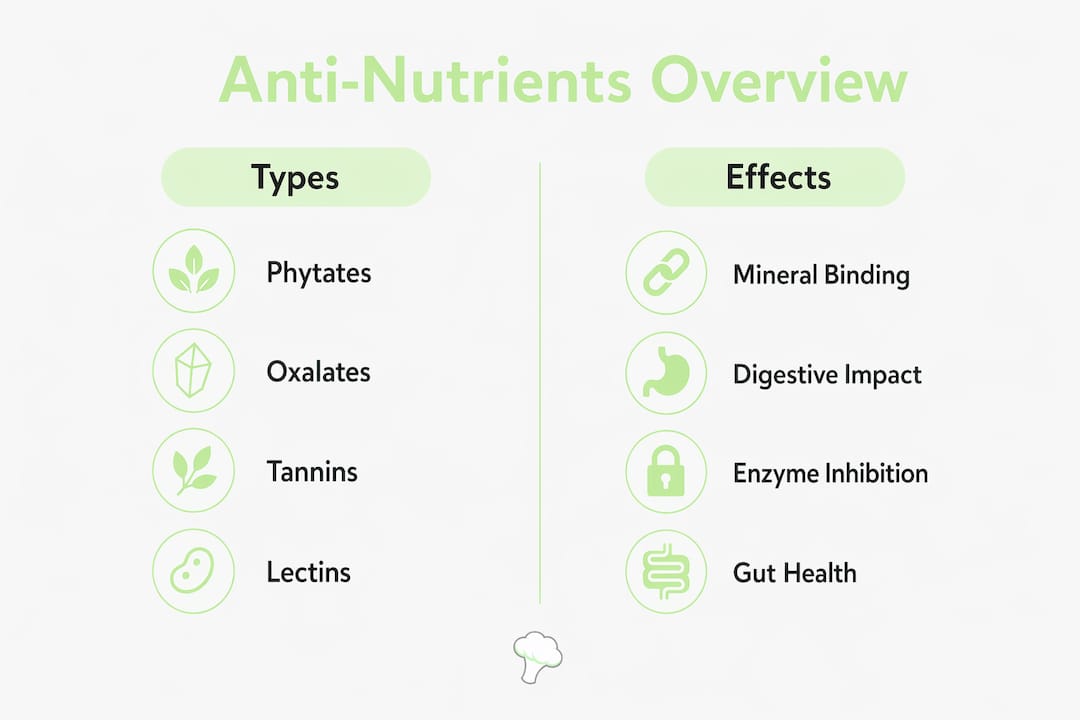
Anti-nutrients are naturally occurring compounds in plant foods that reduce the absorption or utilization of essential nutrients. Phytates, oxalates, tannins, and lectins are the most studied examples. Explaining anti-nutrient effects matters because these compounds appear in many everyday foods, from spinach and beans to whole grains and nuts. Their impact on your health depends heavily on how you prepare food, your current mineral status, and the overall pattern of your diet. Understanding these factors helps you make smarter choices without cutting out nutritious whole foods.
What are the major types of anti-nutrients and how do they affect absorption?
Anti-nutrients are not a single compound. They are a diverse group of molecules, each with a distinct mechanism and a different set of target nutrients.

Phytates (phytic acid) are found in whole grains, legumes, nuts, and seeds. They bind to iron, zinc, magnesium, and calcium in the digestive tract, forming insoluble complexes the body cannot absorb. People who rely heavily on plant-based diets and eat little meat are most exposed to this effect.
Oxalates concentrate in spinach, beets, rhubarb, and almonds. They bind calcium with particular strength. Calcium absorption from dairy reaches roughly 30%, while calcium from spinach delivers only about 5% due to oxalate interference. That gap is large enough to matter if spinach is your primary calcium source.
Tannins appear in tea, coffee, red wine, and legumes. They inhibit iron absorption and can slow digestive enzymes. Drinking black tea with an iron-rich meal reduces the iron your body actually absorbs from that meal.
Lectins are proteins found in raw or undercooked beans, lentils, and wheat. They resist digestion and can irritate the gut lining, particularly in people with sensitive digestion.
Two additional types are worth knowing:
Saponins occur in quinoa, oats, and legumes. They can disrupt gut cell membranes at high concentrations, though rinsing quinoa before cooking removes most surface saponins.
Glucosinolates are found in cruciferous vegetables like broccoli, kale, and cabbage. They interfere with iodine uptake and thyroid function when consumed raw in very large amounts.
The table below summarizes the key anti-nutrients, their primary food sources, and the nutrients most affected.
Anti-nutrient | Primary food sources | Nutrients most affected |
Phytates | Whole grains, legumes, nuts, seeds | Iron, zinc, magnesium, calcium |
Oxalates | Spinach, beets, rhubarb, almonds | Calcium, iron |
Tannins | Tea, coffee, red wine, legumes | Iron, digestive enzymes |
Lectins | Raw beans, lentils, wheat | Gut lining integrity |
Saponins | Quinoa, oats, legumes | Gut cell membranes |
Glucosinolates | Broccoli, kale, cabbage | Iodine, thyroid hormones |
Understanding nutrient bioaccessibility is the next step after identifying which anti-nutrients are present in your meals.
How do anti-nutrients affect overall health beyond nutrient absorption?
The effects of anti-nutrients go well beyond blocking minerals. At low concentrations, several of these compounds produce measurable health benefits.
Phytates, tannins, and saponins have a dual role. They reduce nutrient availability at high doses, but at lower concentrations they lower blood glucose, reduce cholesterol, and may cut cancer risk. This dual nature is why blanket avoidance of anti-nutrient foods is not supported by current research.
Phytic acid specifically activates proteins that regulate intestinal barrier genes. Research shows phytic acid strengthens the gut barrier, helping prevent the condition commonly called “leaky gut.” This finding reframes phytic acid as a context-dependent signaling molecule, not simply a harmful compound.
“Phytic acid should be viewed as a context-dependent molecule with signaling roles, not solely harmful as historically thought. Its presence in whole foods may actively support gut health rather than just reduce mineral absorption.”
The broader dietary picture reinforces this point. Mediterranean and DASH diets are both high in foods containing anti-nutrients, yet both are consistently linked to lower inflammation and reduced chronic disease risk. That outcome is not despite the anti-nutrients. It reflects the fact that whole foods deliver fiber, polyphenols, and phytonutrients alongside anti-nutrients, and the net effect is positive.
The key factors that determine whether anti-nutrients help or harm you include:
Your current iron, zinc, and calcium status
How much variety your diet contains
Whether you prepare foods in ways that reduce anti-nutrient load
The total dose of anti-nutrients across your daily meals
People with well-nourished mineral stores tolerate anti-nutrients far better than those with marginal deficiencies. This is why context matters more than the presence of any single compound.
What practical food preparation strategies reduce anti-nutrient effects?
Food preparation is the most direct tool you have for managing anti-nutrient load. The good news is that common cooking methods work well.
Soaking dried beans, lentils, and grains overnight in water reduces phytates significantly. Soaking also decreases oxalates by up to 77%, making it one of the most effective single steps for mineral-rich plant foods.
Boiling and steaming reduce lectins by up to 94% and phytates by up to 80%. Cooking methods are the most reliable way to make beans and grains safe and nutritious. Never eat kidney beans raw or undercooked.
Fermenting breaks down phytates through microbial enzyme activity. Sourdough bread, tempeh, and fermented legumes all have lower phytate content than their unfermented counterparts.
Sprouting activates phytase, the enzyme that degrades phytic acid naturally within the grain or seed. Sprouted lentils and chickpeas deliver more bioavailable zinc and iron than unsprouted versions.
Heating reduces oxalates by up to 87%, which matters most for high-oxalate vegetables like spinach and beet greens.
There is a trade-off to keep in mind. Soaking and boiling reduce anti-nutrients but also leach water-soluble vitamins and minerals into the cooking water. Discarding that water removes anti-nutrients but also removes some B vitamins and potassium. Using soaking water for soups or sauces partially recovers those losses.
Pro Tip: Pair iron-rich plant foods with vitamin C sources at the same meal. Vitamin C converts non-heme iron into a form the body absorbs more readily, partially offsetting phytate and tannin interference.
Dietary patterns also matter at the macro level. The Mediterranean diet and DASH diet both include legumes, whole grains, and vegetables daily. Their health benefits show that managing anti-nutrients through preparation and food pairing works better than avoidance. Tracking your nutrient interactions across meals gives you a clearer picture of where gaps might exist.
Preparation method | Anti-nutrient reduced | Reduction level |
Soaking | Oxalates, phytates | Up to 77% (oxalates) |
Boiling/steaming | Lectins, phytates | Up to 94% (lectins), up to 80% (phytates) |
Heating | Oxalates | Up to 87% |
Fermenting | Phytates | Significant reduction |
Sprouting | Phytates | Significant reduction |
How do anti-nutrient effects vary among individuals?
Anti-nutrient impact is not the same for everyone. Your personal mineral status is the biggest variable.
Women of reproductive age and frequent blood donors are more sensitive to phytates and tannins because their iron stores are already lower. For these groups, eating tannin-rich tea with every meal or relying on unsoaked legumes as a primary iron source creates a real risk of worsening iron status. The same diet causes no measurable problem for a well-nourished adult with full iron stores.
Digestive tolerance also varies. Lectins in undercooked beans irritate the gut lining in sensitive individuals, with stronger reactions linked to larger doses or poor preparation. Some people experience bloating and discomfort from legumes even when properly cooked, which often reflects individual gut microbiome differences rather than a universal anti-nutrient effect.
Adaptation is real. People who regularly eat legumes and whole grains develop gut microbiomes better equipped to handle anti-nutrients. The body adjusts enzyme production and microbial populations over time, reducing adverse effects with consistent exposure.
Key factors that increase your sensitivity to anti-nutrients:
Low iron or zinc stores before dietary changes
Diets with little variety and heavy reliance on one or two plant staples
Digestive conditions that already compromise absorption
Consistently poor food preparation practices
Pro Tip: If you are increasing legume intake for the first time, start with well-cooked, soaked lentils rather than canned kidney beans. Lentils have lower lectin content and are easier on the gut during the adaptation period.
Personalized nutrition assessment helps you identify where your specific vulnerabilities lie. Tracking over 60 nutrients with a tool like Bimiapp gives you the data to spot patterns, not just guesses. The micronutrient guide from Bimiapp explains how to read those patterns in practical terms.
Key Takeaways
Anti-nutrients reduce mineral absorption in specific, measurable ways, but their net health impact depends on preparation methods, individual mineral status, and overall diet quality.
Point | Details |
Anti-nutrients are compound-specific | Phytates, oxalates, tannins, and lectins each target different nutrients and require different preparation responses. |
Calcium absorption gap is significant | Dairy delivers roughly 30% calcium absorption versus about 5% from spinach due to oxalates. |
Cooking cuts anti-nutrient load sharply | Boiling reduces lectins by up to 94% and phytates by up to 80%, making preparation the most direct control lever. |
Individual mineral status drives risk | People with low iron or zinc stores face greater harm from anti-nutrients than well-nourished individuals. |
Whole-food diets still win | Mediterranean and DASH diets are high in anti-nutrient foods yet consistently lower chronic disease risk. |
The case for context over fear
My honest view is that the anti-nutrient conversation gets distorted in both directions. Wellness content often treats phytates and lectins as toxins to eliminate. Mainstream nutrition sometimes dismisses concerns entirely. Neither position reflects what the research actually shows.
What I find most useful is thinking about anti-nutrients the way you would think about any dose-dependent compound. Spinach is not dangerous. A diet built almost entirely on raw spinach and unsoaked beans, eaten by someone with low iron stores and no dietary variety, creates a real problem. That distinction matters enormously.
The phytic acid and gut barrier research genuinely surprised me. The idea that a compound long labeled as purely harmful actively supports intestinal integrity shifts the entire framing. It means the goal is not to eliminate anti-nutrients but to manage concentration and preparation.
Preparation is where most people have the most control and use it the least. Soaking beans overnight takes about 30 seconds of active effort. Fermenting grains is more involved, but even switching from regular oats to sourdough bread covers a meaningful portion of the benefit. The gap between knowing this and doing it consistently is where dietary habits actually live.
The most practical shift I recommend is moving from food avoidance to food preparation awareness. Eat the legumes, the whole grains, the leafy greens. Soak, cook thoroughly, and pair strategically. Track your mineral intake over time so you know whether your approach is working.
— Alvi
How Bimiapp helps you track anti-nutrient interactions in your diet
Managing anti-nutrient effects requires more than general knowledge. You need to see how your actual meals stack up against your personal nutrient needs.

Bimiapp tracks over 60 nutrients, including iron, zinc, calcium, and magnesium, the minerals most affected by anti-nutrients. Its AI food recognition captures meals from photos, estimates portions, and analyzes nutrient content without manual logging. Personalized recommendations adjust to your age, weight, BMI, and activity level, so the guidance reflects your specific situation rather than population averages. The Meals Vault stores your data locally and generates trend reports, making it easy to spot patterns over time. Start tracking your daily nutrient intake with Bimiapp to see exactly where anti-nutrient effects may be affecting your mineral status.
FAQ
What are anti-nutrients exactly?
Anti-nutrients are naturally occurring compounds in plant foods that reduce the absorption or activity of essential nutrients. Common examples include phytates, oxalates, tannins, lectins, saponins, and glucosinolates.
Are anti-nutrients always harmful?
Anti-nutrients are not always harmful. At low concentrations, compounds like phytic acid support gut barrier integrity and may reduce blood glucose and cancer risk, making their effects context-dependent.
How do you reduce anti-nutrients in food?
Soaking, boiling, fermenting, and sprouting all reduce anti-nutrient content significantly. Boiling cuts lectins by up to 94% and phytates by up to 80%, making thorough cooking the most reliable method.
Who is most at risk from anti-nutrient effects?
People with low iron or zinc stores, including women of reproductive age and frequent blood donors, face the greatest risk from anti-nutrients like phytates and tannins in their diet.
Does cooking destroy all anti-nutrients?
Cooking reduces most anti-nutrients substantially but rarely eliminates them entirely. Combining preparation methods such as soaking before boiling produces the greatest reductions across phytates, oxalates, and lectins.
Recommended
Comments