
How to Manage Nutrient Priorities for Better Health


TL;DR:
Nutrient prioritization involves assessing your unique risks and focusing on the most critical nutritional needs first. Most people have common nutrient gaps despite eating varied diets, with vitamin D, calcium, and omega-3s being top priorities. A thorough risk assessment, food-first approach, targeted testing, and regular reevaluation optimize nutrient intake while avoiding overcomplication.
Nutrient prioritization is the process of assessing your unique nutritional risks and designing a focused plan to address your most critical needs first. Most people eat a varied diet yet still carry common nutrient gaps in vitamins, minerals, and fatty acids. Research identifies vitamin D, calcium, omega-3s, magnesium, folate, and dietary fiber as the highest-priority nutrients at the population level. Knowing how to manage nutrient priorities means you stop guessing and start acting on real data about your body.
What are the key steps to assess your nutrient priorities?

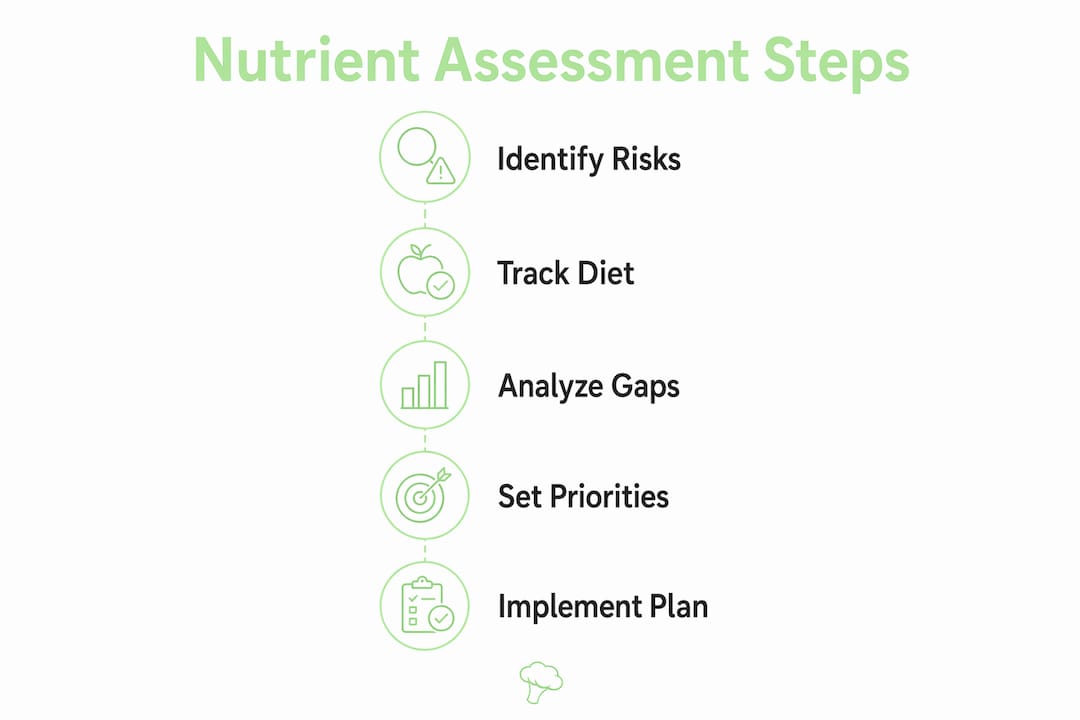
A personal nutrient priority plan starts with a 5-step risk assessment that covers diet pattern, life stage, gut health, and medications. Each factor shapes which nutrients you are most likely to be missing. A plant-based eater faces different gaps than someone with a digestive condition like Crohn’s disease. Identifying your specific risk profile is the foundation of every effective nutrient management strategy.
Step-by-step assessment process
Follow these four steps to map your nutritional starting point:
Audit your diet pattern. Log three to five typical days of eating. Look for food groups you consistently skip, such as dairy, seafood, or leafy greens. Each missing group signals a likely gap.
Factor in your life stage. Pregnancy raises folate and iron needs. Adults over 50 absorb vitamin B12 less efficiently. Teenagers need more calcium than adults. Life stage changes your baseline requirements.
Review medications and gut health. Metformin depletes B12. Proton pump inhibitors reduce magnesium absorption. Poor gut health limits nutrient absorption across the board. List every medication and any digestive symptoms before building your plan.
Consider targeted testing. Targeted testing is only recommended when results will directly influence your dietary or supplement choices. A serum ferritin test makes sense if you feel fatigued and eat little red meat. A full micronutrient panel without symptoms rarely adds useful information.
Assessment tool | What it reveals | Best used when |
3-day food diary | Dietary gaps by food group | Starting any new plan |
Serum ferritin | Iron stores | Fatigue, low meat intake |
25-OH vitamin D | Vitamin D status | Limited sun exposure |
Serum B12 | B12 absorption | Vegan diet, metformin use |
Gut symptom checklist | Absorption risk | Bloating, loose stools |
Pro Tip: Keep your food diary on a regular weekday and one weekend day. Weekend eating patterns often differ significantly and reveal gaps your weekday log misses.
How to prioritize nutrients effectively for your health goals
Prioritizing nutrients for health requires three clear criteria: deficiency risk, health impact, and bioavailability. A nutrient ranks high on your list when you are likely deficient, the deficiency has a measurable health consequence, and the nutrient is available in food or an absorbable supplement form. Applying these criteria stops you from chasing trendy supplements and keeps your plan grounded in real need.
Balancing macronutrients with micronutrients is a parallel task, not a sequential one. Effective nutrient allocation requires managing calorie balance, macronutrient ratios, and micronutrient density together, tailored to your lifestyle and wellness goals. A high-protein diet that ignores magnesium and zinc will limit muscle recovery. A low-fat diet that cuts omega-3s will affect brain function and inflammation control.
Matching nutrients to specific health goals
Different goals shift your priority list:
Energy and fatigue: Prioritize iron, B12, vitamin D, and magnesium. These four nutrients directly power cellular energy production.
Immune function: Vitamin C, zinc, vitamin D, and selenium top the list. Each plays a distinct role in immune cell activity.
Bone health: Calcium, vitamin D, vitamin K2, and magnesium work together. Supplementing calcium without vitamin K2 and D reduces its effectiveness.
Cardiovascular health: Omega-3 fatty acids, magnesium, folate, and potassium are the core priorities. Dietary fiber supports this group by improving cholesterol metabolism.
Hormonal balance: Zinc, iodine, selenium, and vitamin B6 support thyroid and reproductive hormone function.
Nutrient category | Priority level | Primary food sources |
Vitamin D | High (population-wide) | Fatty fish, fortified dairy, sunlight |
Omega-3 fatty acids | High (population-wide) | Salmon, sardines, flaxseed |
Magnesium | High (population-wide) | Nuts, seeds, dark leafy greens |
Folate | High (reproductive age) | Legumes, leafy greens, fortified grains |
Zinc | Moderate to high | Meat, shellfish, pumpkin seeds |
Vitamin C | Moderate | Citrus, bell peppers, broccoli |
Understanding nutrient interactions matters here. Calcium competes with iron for absorption. Fat-soluble vitamins like A, D, E, and K require dietary fat to absorb properly. Prioritizing one nutrient without accounting for its neighbors can reduce the benefit of your entire plan.
Step-by-step nutrient management strategies to implement your plan
Successful nutrient management starts with food first and uses supplementation only when food cannot close the gap. This is not a philosophical preference. Food delivers nutrients in combinations that improve absorption and reduce the risk of excess. A supplement fills a specific, confirmed gap.
Follow this sequence to build and execute your plan:
Build a food-first foundation. Identify the two or three food groups that address your highest-priority gaps. If vitamin D is your top concern, add fatty fish twice a week and spend 15 minutes in midday sun. If magnesium is low, add a handful of pumpkin seeds or almonds daily.
Add targeted supplements only for confirmed gaps. Use the smallest effective dose and avoid stacking overlapping products. If you take a B-complex, you do not need separate B12 unless your absorption is clinically impaired.
Set a clear timeframe. Repletion plans typically require 8–12 weeks for notable improvements, depending on the nutrient and your individual health. Mark a reassessment date when you start. Do not adjust the plan before that date unless you experience side effects.
Reassess and adjust. At the 8-week mark, review your symptoms, energy, and any follow-up test results. If the gap is closed, reduce or stop the supplement. If progress is slow, check for absorption barriers before increasing the dose.
Track your intake consistently. Daily tracking reveals whether your food choices are actually delivering the nutrients you planned for. A single meal can look nutritious but miss key micronutrients entirely.
Pro Tip: Pair fat-soluble vitamins like D and K2 with your largest meal of the day. Fat in that meal significantly increases their absorption compared to taking them on an empty stomach.
Reducing plan complexity is not a shortcut. Simple, focused plans produce better outcomes than complex, high-dose regimens because adherence stays higher and root causes get addressed directly.
Common mistakes when managing nutrient priorities
The most common mistake is treating symptoms as proof of deficiency. Symptoms do not reliably indicate deficiencies. Fatigue, brain fog, and muscle cramps each have dozens of possible causes. Acting on symptoms alone without dietary assessment or testing leads to ineffective supplement use and sometimes unsafe combinations.
Watch for these specific pitfalls:
Broad lab testing without symptoms. Ordering a full micronutrient panel without clear risk factors generates noise. Practitioners avoid broad, non-targeted lab tests unless symptoms or confirmed risk factors justify the cost and follow-up.
Ignoring drug-nutrient interactions. Common medications deplete specific nutrients. Missing this step means your supplement plan works against your medication, not with it.
Chasing high doses. More is not better for most nutrients. Excess vitamin A causes toxicity. Excess zinc blocks copper absorption. Dose matters as much as choice.
Skipping reassessment. A plan built for your needs in january may not fit your needs in july. Life stage, activity level, and diet all shift.
“Self-diagnosing nutrient gaps without data can lead to ineffective or unsafe supplement use.” Confirmation through dietary assessment and appropriate testing is the safer path.
Knowing when to seek professional advice is part of the plan. If you are managing a chronic condition, taking multiple medications, or have a history of malabsorption, work with a registered dietitian before making significant changes to your supplement regimen.
Key takeaways
Effective nutrient prioritization requires a structured risk assessment, food-first planning, targeted supplementation, and regular reassessment to close real gaps without creating new ones.
Point | Details |
Start with risk assessment | Audit diet, life stage, medications, and gut health before choosing any supplement. |
Use population-priority nutrients as a baseline | Vitamin D, magnesium, omega-3s, and folate are the most common gaps across all demographics. |
Food first, supplements second | Build your plan around food sources and add supplements only for confirmed, specific gaps. |
Set an 8–12 week timeline | Allow enough time for repletion before reassessing results or changing your approach. |
Keep plans simple | Fewer, well-chosen supplements with clear dosing outperform complex, high-dose regimens. |
Why I think most people overcomplicate their nutrient plans
After spending years looking at how people approach nutrition, the pattern I see most often is this: someone feels off, reads about a dozen nutrients online, and ends up taking eight supplements by the end of the week. The plan feels thorough. It rarely works.
The real shift happens when you accept that three well-chosen nutrients, addressed consistently over two to three months, will outperform a cabinet full of bottles. The research backs this up. Simple, focused plans produce better adherence and better outcomes. The complexity feels productive but it is usually a distraction from fixing the one or two things that actually matter.
What I find most useful is treating your nutrient plan like a short experiment. Pick your top two gaps. Address them with food first, then a single supplement if needed. Give it eight weeks. Measure the result. Then adjust. That cycle, repeated a few times a year, builds a personalized micronutrient approach that actually fits your life. It also teaches you more about your body than any lab panel ever will.
The flexibility piece matters too. A rigid plan you abandon in week three does nothing. A flexible plan you follow for three months changes your health.
— Alvi
Bimiapp makes nutrient priority tracking practical
Knowing your nutrient priorities is one thing. Tracking whether your daily meals actually deliver them is another. Bimiapp monitors over 60 nutrients, including amino acids, vitamins, minerals, and fatty acids, giving you a complete picture of what you are actually eating versus what you need.

The platform uses AI-powered food recognition to log meals from photos, estimates portion sizes, and generates personalized recommendations based on your age, weight, BMI, and activity level. The Meals Vault stores your data locally so you can review trends and spot recurring gaps over time. If you are ready to move from guessing to knowing, start tracking your nutrients with Bimiapp and see exactly where your priorities stand. You can also review how it works to understand the full feature set before you begin.
FAQ
What does nutrient prioritization mean?
Nutrient prioritization is the process of identifying your highest-risk nutritional gaps and addressing them first through diet and targeted supplementation. It focuses your efforts on the nutrients most likely to affect your health.
Which nutrients are most commonly deficient?
Vitamin D, calcium, omega-3 fatty acids, magnesium, folate, and dietary fiber are identified as priority nutrients at the population level in the United States. Your individual priorities depend on diet, life stage, and health status.
How long does it take to correct a nutrient deficiency?
Repletion plans typically require 8–12 weeks for noticeable improvement, depending on the nutrient and your individual health. Reassess at that point before adjusting your plan.
Should I get a full nutrient panel before starting?
Broad lab testing without clear symptoms or risk factors is not recommended. Targeted testing makes sense only when the results will directly change your dietary or supplement choices.
Can I rely on symptoms to identify my nutrient gaps?
Symptoms alone do not reliably confirm deficiencies. Fatigue and muscle cramps have many causes. Dietary assessment and targeted testing give you more accurate information than symptoms alone.
Recommended
header.all-comments