
Nutritional Analysis Methods 2026: Top Techniques


TL;DR:
Nutritional analysis in 2026 relies on AI food imaging, high-resolution mass spectrometry, and omics technologies for precise nutrient measurement. These methods surpass traditional self-reporting by providing molecular-level insights and individualized data, enhancing accuracy and utility. Selecting the appropriate approach depends on accuracy needs, budget, speed, and specific nutrients required for clinical, research, or personal health applications.
Nutritional analysis methods in 2026 are defined by the convergence of AI-driven food imaging, high-resolution mass spectrometry, and multi-omics technologies that together deliver molecular-level precision in dietary assessment. The field has moved decisively beyond self-reported food diaries and basic lab panels. Researchers, nutritionists, and health enthusiasts now have access to tools ranging from clinical LC-MS workflows to smartphone-based AI trackers like Bimiapp, available on the App Store, that can identify over 60 nutrients from a single photo. This article breaks down the top methods shaping nutritional analysis methods 2026, ranked by technology, accuracy, and real-world utility.
1. what are the top ai-powered nutritional analysis methods in 2026?
AI food image recognition is the fastest-growing category in 2026 food analysis techniques. Systems now combine depth cameras, volumetric segmentation, and standardized recipe databases to estimate nutrient intake from pre- and post-meal photographs. A clinical system validated on 1,000 food sample recognitions calculates energy, protein, fat, carbohydrates, vitamins, minerals, and fiber by comparing tray images against cooking-loss-adjusted recipe data. That level of automation removes the manual burden from clinical dietitians without sacrificing data quality.
Accuracy benchmarks are now concrete. A prospective pilot study analyzing 362 meals from 67 patients found AI image analysis achieved roughly 40g mean absolute error, approximately 10% of tray weight. That result outperformed nurse-recorded diaries, which consistently overestimated intake. Food waste averaged 30.7% across the study group, a variable that manual methods routinely miss.
Key deployment requirements for AI food recognition systems:
Standardized photography conditions: 90-degree overhead angle and at least 500 lux lighting reduce segmentation errors.
Cooking-loss-aware recipe databases: Raw ingredient weights must be adjusted for preparation methods to produce accurate consumed-nutrient figures.
Nutrient-level calibration: Energy and carbohydrate estimates reach correlation coefficients above 0.8 and stay within ±10% error, but protein and lipid estimates can carry more than 20% systematic bias without explicit calibration steps.
Pro Tip: Run nutrient-specific error analyses before deploying any AI food recognition system clinically. A tool that performs well for energy may still misreport protein by a clinically significant margin.
2. how does high-resolution mass spectrometry advance nutritional analysis?
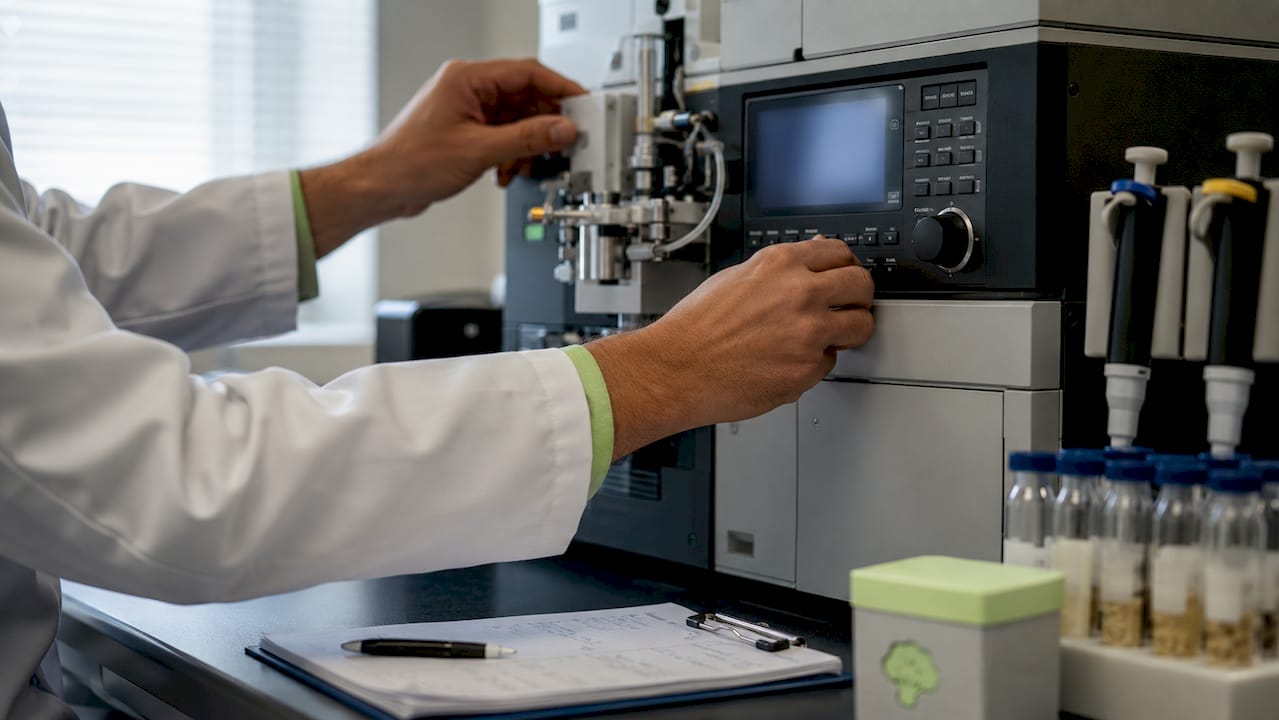
High-resolution mass spectrometry, specifically liquid chromatography-mass spectrometry (LC-MS), is the gold standard for molecular-level food composition analysis. Modern LC-MS workflows combine targeted and untargeted data acquisition, allowing researchers to quantify known nutrients while simultaneously screening for thousands of unannotated molecular features. Machine learning now handles the data volume that these workflows generate, turning raw spectral output into interpretable nutrient profiles.
The Periodic Table of Food Initiative (PTFI) has formalized this approach at scale. PTFI has released LC-MS data covering 500 foods and thousands of molecular features, many of which remain unannotated. That database gives researchers a reference framework for untargeted metabolomics studies and food quality control programs.
LC-MS Approach | Primary Use | Key Advantage |
Targeted acquisition | Quantifying known nutrients | High precision for specific analytes |
Untargeted acquisition | Discovering novel food compounds | Broad molecular coverage |
Data-independent acquisition (DIA) | Comprehensive profiling | Reproducible across sample batches |
LC-MS/MS multi-analyte workflows | Regulatory compliance testing | Validated across 295 analytes |
Regulated multi-analyte LC-MS/MS workflows follow matrix-appropriate validation protocols. Proficiency testing across 295 analytes produced reliable z-scores in 368 of 408 test cases, confirming that these methods hold up under external audit conditions. For food manufacturers and clinical researchers, that validation record matters as much as the raw analytical capability.
3. what emerging omics technologies are reshaping nutrient measurement?
The omics category covers genomics, proteomics, metabolomics, and metagenomics applied to nutrition research. Metagenome-informed metaproteomics is the most significant new entry in 2026. It maps gut microbial protein expression in response to dietary intake, giving researchers a molecular window into how specific foods are actually digested and absorbed at the individual level. That is a fundamentally different data type than anything a food diary or even a blood panel can provide.
Dietary intake measurement is shifting away from self-report toward technology-assisted and omics-plus-AI methods because traditional approaches carry inherent recall bias. Wearable sensors add a real-time physiological layer to this picture. Continuous glucose monitors, sweat electrolyte sensors, and accelerometers now feed into integrated platforms that correlate food intake events with biological response data.
Practical applications and current limitations:
Metagenomics: Reveals individual differences in nutrient bioavailability, but requires stool sampling and bioinformatics infrastructure not yet standard in clinical settings.
Wearable sensors: Provide real-time data on glucose and hydration, but measurement bias across wearables threatens accuracy if calibration-aware modeling is not built into the analysis pipeline from the start.
Metabolomics panels: Capture post-absorptive nutrient status with high specificity, but sample processing costs remain a barrier for routine clinical use.
Pro Tip: When combining wearable data with omics outputs, apply regression calibration at the instrument level before merging datasets. Uncorrected bias compounds across data streams and distorts precision nutrition conclusions.
4. how do regulatory labeling standards shape nutritional analysis methods?
EU Regulation 1169/2011 sets the baseline for what nutritional analysis must deliver in food product development and labeling. The regulation mandates declaration of energy, fat, saturates, carbohydrates, sugars, protein, and salt. Fiber, vitamins, and minerals are voluntary unless a health claim is made. Unprocessed single-ingredient products qualify for exemptions, but most manufactured foods must comply fully.
Recipe-based calculation is the most common compliance method. Analysts input ingredient weights, apply cooking-loss factors, and pull nutrient values from validated databases such as USDA FoodData Central or national food composition tables. The accuracy of this approach depends entirely on the quality of the underlying database and the precision of the cooking-loss adjustments applied.
Labeling Requirement | Mandatory | Calculation Method |
Energy (kcal/kJ) | Yes | Recipe calculation with loss factors |
Fat and saturates | Yes | Recipe or direct analysis |
Carbohydrates and sugars | Yes | Recipe or direct analysis |
Protein | Yes | Recipe or direct analysis |
Salt | Yes | Recipe or direct analysis |
Fiber | No (voluntary) | Recipe or direct analysis |
Vitamins and minerals | No (unless claimed) | Direct analysis preferred |
For nutritional software tools, regulatory compliance means the recipe database must include process-loss coefficients for common cooking methods. Tools that skip this step produce systematically inflated nutrient values, which creates both clinical and legal risk. Integrating standardized nutrient databases with cooking-loss factors is the technical requirement that separates compliant tools from basic calorie counters.
5. how to select the right nutritional analysis method
Method selection depends on four variables: accuracy requirements, available budget, speed of output, and the specific nutrients you need to measure. A clinical dietitian managing hospital patients needs real-time output and broad nutrient coverage. A food scientist validating a new product formulation needs regulatory-grade precision for a defined analyte list. A health-conscious individual tracking nutritional deficiencies needs an accessible, daily-use tool that covers micronutrients beyond basic macros.
Method | Best For | Accuracy | Cost | Speed |
AI food image recognition | Clinical monitoring, daily tracking | Good for energy/carbs | Low to medium | Real-time |
LC-MS targeted analysis | Research, regulatory compliance | Very high | High | Days |
LC-MS untargeted metabolomics | Discovery research | Very high | Very high | Days to weeks |
Wearable sensors + AI | Continuous physiological monitoring | Moderate | Medium | Real-time |
Recipe database calculation | Food labeling, product development | Moderate | Low | Hours |
Metagenomics/metaproteomics | Gut-level nutrient absorption research | High | Very high | Weeks |
For researchers and nutritionists who need broad nutrient coverage without laboratory infrastructure, Bimiapp delivers AI-powered food recognition that tracks over 60 nutrients, including amino acids, fatty acids, and micronutrients, from a single meal photo. It is available on the App Store and applies personalized recommendations based on age, weight, BMI, and activity level. The Meals Vault feature stores longitudinal data locally, enabling trend analysis and report generation that supports both clinical review and personal health optimization. You can check how Bimiapp works to understand the imaging and database integration behind its nutrient estimates.
Key takeaways
The most effective nutritional analysis methods in 2026 combine AI food imaging, LC-MS molecular profiling, and omics technologies to deliver nutrient data that self-report methods cannot match.
Point | Details |
AI image recognition accuracy | Energy and carb estimates reach r>0.8, but protein and lipid estimates need explicit calibration. |
LC-MS remains the gold standard | Targeted and untargeted LC-MS workflows cover hundreds of analytes with regulatory-grade validation. |
Omics adds biological depth | Metagenomics and metabolomics reveal individual nutrient absorption patterns beyond dietary intake data. |
Regulatory compliance drives method choice | EU 1169/2011 mandates recipe-based calculation with cooking-loss factors for food labeling. |
Tool selection depends on use case | Match method to accuracy needs, budget, and nutrient specificity before committing to a platform. |
Where nutritional analysis is actually headed
The conversation in nutrition research right now is less about which technology is most impressive and more about which biases each method introduces. That shift matters. I have watched AI food recognition tools get adopted in clinical settings based on headline accuracy numbers, only for teams to discover later that their protein estimates were systematically off by 20% or more. The technology was not wrong. The deployment was.
What I find genuinely promising is the move toward calibration-aware modeling as a first-class design requirement rather than an afterthought. When bias correction is built into the model architecture from day one, rather than patched on after validation failures, the clinical utility of these tools improves substantially. Regression calibration and uncertainty-aware deep learning are not exotic concepts anymore. They are becoming table stakes for any serious precision nutrition platform.
The multi-omics direction is real, but the timeline for routine clinical use is longer than the conference presentations suggest. Metagenomics requires infrastructure, expertise, and turnaround times that most clinical environments cannot support today. Wearables are closer to practical deployment, but the equity problem is real. If calibration models are trained on narrow population samples, the tools will perform well for some users and poorly for others, and the people most likely to fall into the “poorly” category are often those with the greatest health needs.
My honest recommendation: adopt AI-assisted food tracking now for daily monitoring, pair it with periodic targeted lab panels for clinical decisions, and watch the omics space for the next three to five years. The tools are coming. The infrastructure is not quite there yet.
— Alvi
Track more than macros with Bimiapp
Most nutrition apps stop at calories, protein, fat, and carbs. Bimiapp tracks over 60 nutrients per meal, including amino acids, fatty acids, vitamins, and minerals, using AI food recognition that works from a single photo. The platform is available on the App Store and applies your personal metrics, including age, weight, BMI, and activity level, to generate nutrient recommendations specific to you.

The Meals Vault stores your data locally so you can review trends, generate reports, and spot deficiencies before they become health problems. For nutritionists managing clients or researchers tracking dietary interventions, Bimiapp provides the depth that basic trackers skip. Visit Bimiapp nutrition tracking to start building a complete picture of your nutrient intake today.
FAQ
What is the most accurate nutritional analysis method in 2026?
LC-MS targeted analysis delivers the highest accuracy for specific analytes, with validated performance across 295 analytes in regulated workflows. For broad daily nutrient tracking, AI food image recognition is the most practical option.
How accurate is AI food image recognition for nutrient estimation?
AI systems achieve correlation coefficients above 0.8 for energy and carbohydrates, staying within ±10% error under controlled conditions. Protein and lipid estimates can carry more than 20% bias without nutrient-specific calibration.
What nutrients does EU regulation 1169/2011 require on food labels?
EU 1169/2011 mandates declaration of energy, fat, saturates, carbohydrates, sugars, protein, and salt. Fiber, vitamins, and minerals are voluntary unless a specific health claim is made.
How do omics methods differ from traditional nutritional analysis?
Omics methods like metagenomics and metabolomics measure biological responses to food at the molecular level, capturing individual differences in nutrient absorption that dietary intake records cannot detect.
Can wearable sensors replace lab-based nutritional analysis?
Wearable sensors provide real-time physiological data on glucose and hydration but do not replace lab analysis for comprehensive nutrient profiling. They work best as a complementary layer alongside AI food tracking and periodic targeted lab panels.
Recommended
Comments