
Why Track Sodium Intake: Your Heart Health Guide


TL;DR:
Many Americans consume over 3,300 mg of sodium daily, far exceeding recommended limits for heart health. Tracking sodium intake with tools like Bimiapp helps identify hidden sources and promotes healthier dietary choices. Effective monitoring reduces hypertension risk, supports chronic disease management, and encourages informed, long-term eating habits.
Tracking sodium intake means consistently monitoring the amount of sodium you consume each day to protect your heart and manage your overall health. Most Americans consume over 3,300 mg of sodium daily, well above the American Heart Association’s recommended limit of 2,300 mg. That gap between what you eat and what your body needs is exactly why sodium monitoring matters. Tools like Bimiapp make it straightforward to log meals, check nutrient levels, and spot patterns before they become health problems. This guide explains how sodium affects your body, where it hides in your diet, and how to track it without making it a full-time job.
Why track sodium intake for your heart health?
Sodium monitoring, the clinical term for tracking dietary sodium, is the practice of recording your daily sodium consumption to stay within safe limits. The core reason to do it is simple: excess sodium raises blood pressure, and high blood pressure is the leading driver of heart disease and stroke.

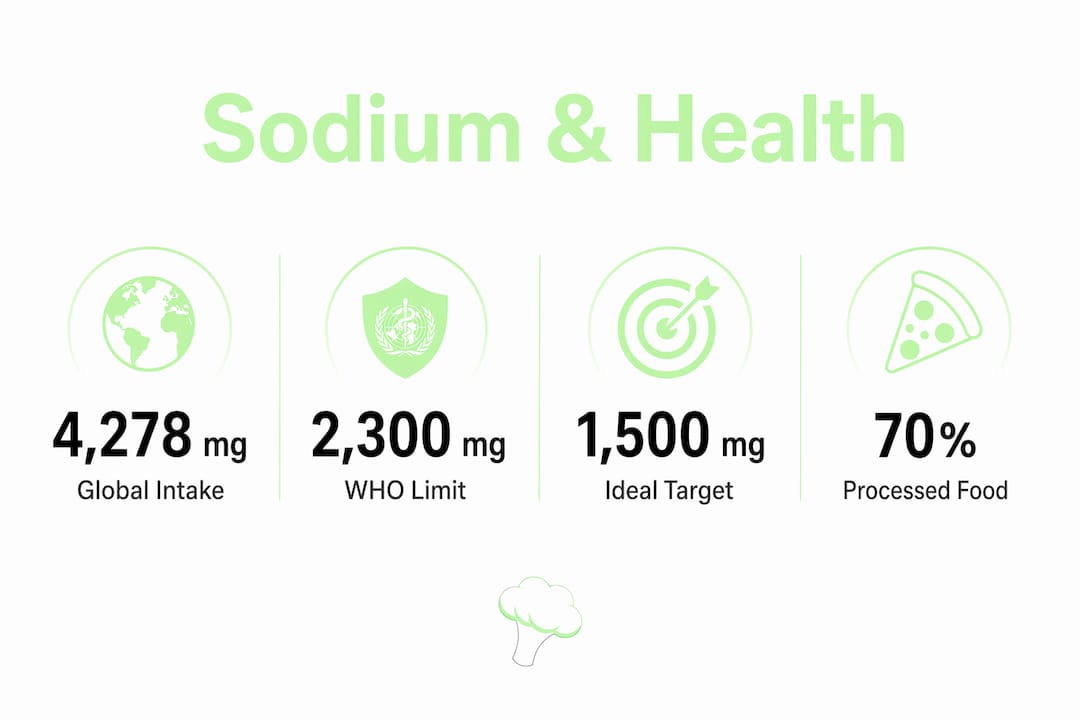
The global mean sodium intake sits at about 4,278 mg per day. That is more than double the World Health Organization’s recommended limit of less than 2,000 mg per day. The WHO links excess sodium to 1.7 million deaths annually. That number tells you this is not a minor dietary preference issue. It is a public health crisis driven largely by unawareness.
Bimiapp tracks over 60 nutrients, including sodium, and gives you a real-time picture of where you stand each day. When you can see your sodium total building across meals, you make different choices. That visibility is the foundation of effective sodium management.
How does sodium affect your body and health?
Sodium is a mineral your body needs to function. It regulates fluid balance, supports nerve signaling, and helps muscles contract. Your kidneys manage sodium levels, but only up to a point.
When you consume too much sodium, your body retains water to dilute it. That extra fluid increases blood volume, which forces your heart to work harder. Over time, this raises blood pressure, a condition known as hypertension. Hypertension is the primary risk factor for heart attack, stroke, and kidney disease.
Here is what excess sodium does to your body over time:
Raises blood pressure by increasing fluid volume in your bloodstream
Strains the kidneys, which must filter the excess, accelerating kidney disease in vulnerable individuals
Increases stroke risk by damaging arterial walls under sustained high pressure
Worsens heart failure by causing fluid buildup around the heart and lungs
Contributes to bone loss because excess sodium causes calcium to be excreted through urine
Sodium deficiency is rare in the United States. The far more common problem is overconsumption, which is why the importance of sodium tracking applies to nearly every adult.
Pro Tip: If you have been diagnosed with hypertension, congestive heart failure, or chronic kidney disease, ask your doctor for a specific daily sodium target. General guidelines are a starting point, but your condition may require a stricter limit.
What are the main sources of dietary sodium?
Most people assume the salt shaker is the main problem. It is not. 70% of sodium intake comes from processed, packaged, and restaurant foods, not from salt added at the table. That misconception leads people to underestimate their intake significantly.
Here are the top sources of hidden dietary sodium:
Bread and rolls. A single slice of white bread can contain 150 mg or more. Most people eat two to four slices per day without thinking about sodium at all.
Deli meats and cured proteins. A two-ounce serving of deli turkey can contain 500 mg. A sandwich with condiments can easily hit 1,000 mg before you add chips or soup.
Canned soups and broths. A single can of chicken noodle soup often contains 800–1,800 mg of sodium. Many people eat the whole can, which counts as two servings on the label.
Condiments and sauces. Soy sauce, hot sauce, ketchup, and salad dressings add sodium in small volumes that feel insignificant but accumulate fast.
Restaurant meals. A single restaurant entrée can contain your entire daily sodium allowance. Fast food and sit-down chains both tend to use sodium heavily for flavor and preservation.
The table below shows how quickly sodium adds up in a typical day:
Meal | Food item | Approximate sodium (mg) |
Breakfast | 2 slices toast + butter | 300 |
Lunch | Deli turkey sandwich + condiments | 1,100 |
Snack | Handful of pretzels | 400 |
Dinner | Restaurant pasta dish | 1,200 |
Total | 3,000 |
That total reaches 3,000 mg before a single grain of table salt is added. Reading labels carefully and accounting for actual serving sizes is the only reliable way to know what you are consuming. Many people eat multiple servings of a product while only checking the per-serving sodium number, which means their real intake is two or three times what they calculated.
Why is tracking sodium intake beneficial for your health?
Tracking sodium intake delivers measurable health benefits, particularly for cardiovascular and kidney health. The benefits of monitoring sodium go beyond just knowing a number. Tracking changes behavior.
“Tracking sodium is about building ‘big picture’ awareness to identify habitually high-sodium foods and substitute strategically, rather than a lifetime obsession with every milligram.” — American Heart Association
Here is what consistent sodium monitoring does for you:
Prevents and manages hypertension. When you see your sodium total in real time, you naturally reduce high-sodium choices. This directly lowers blood pressure over weeks and months.
Reduces cardiovascular risk. The American Heart Association recommends an ideal limit of 1,500 mg per day for adults at high cardiovascular risk. Reaching that target requires tracking because you cannot estimate accurately without data.
Supports congestive heart failure management. For CHF patients, strict sodium monitoring prevents acute fluid retention and reduces hospital readmission rates. This is one of the most clinically significant applications of sodium tracking.
Guides smarter food substitutions. Once you identify your highest-sodium habits, you can swap strategically. Replacing canned soup with homemade broth, or soy sauce with a low-sodium alternative, cuts hundreds of milligrams per day.
Builds long-term dietary awareness. A 2026 randomized controlled trial published in JMIR mHealth and uHealth found that app-based sodium tracking improved self-reported salt behaviors in chronic kidney disease patients. Behavioral change is the first step toward measurable physiological improvement.
Bimiapp supports all of these outcomes by tracking sodium alongside 60-plus other nutrients, so you see how sodium fits into your complete nutritional picture rather than viewing it in isolation.
How to track sodium intake effectively
Tracking sodium does not require a nutrition degree. It requires a consistent method and the right tools.
Method | Best for | Limitation |
Reading nutrition labels | Understanding packaged foods | Does not cover restaurant meals or fresh foods |
Food diary (paper) | Low-tech users | Time-consuming, no automatic totals |
General calorie apps | Basic macro tracking | Often miss micronutrients like sodium |
Bimiapp | Comprehensive nutrient tracking including sodium | Requires consistent logging |
The most reliable approach combines label reading with a dedicated tracking app. Here is how to build that habit:
Start by checking the sodium content on every packaged food you buy. Pay attention to the serving size first, then multiply the sodium number by how many servings you actually eat. This single step corrects the most common tracking error.
Log every meal in Bimiapp as you eat it, not at the end of the day. Memory-based logging underestimates intake. Bimiapp’s AI photo recognition lets you capture a meal image and get an instant nutrient breakdown, including sodium, without manually entering every ingredient. That speed removes the biggest barrier to consistent tracking.
Review your weekly sodium trends in Bimiapp’s Meals Vault. Patterns matter more than single days. If you consistently spike on weekdays when you eat out for lunch, that is your target behavior to change.
Pro Tip: When cooking at home, replace salt with fresh herbs, lemon juice, garlic, or spices. Replacing salt with herbs reduces sodium without sacrificing flavor, and your palate adjusts within two to three weeks.
For a deeper look at how modern apps handle nutrient data, the nutrient tracking methodology behind platforms like Bimiapp explains how sodium values are sourced and verified. Accuracy in the data means accuracy in your decisions.
Key takeaways
Tracking sodium intake is the most direct way to close the gap between what you consume and what your heart can safely handle.
Point | Details |
Sodium overconsumption is widespread | Americans average over 3,300 mg daily, far above the 2,300 mg AHA limit. |
Hidden sources drive most intake | 70% of dietary sodium comes from processed and restaurant foods, not the salt shaker. |
Tracking changes behavior | Consistent logging helps you identify high-sodium habits and substitute strategically. |
High-risk groups need stricter monitoring | CHF and CKD patients require strict daily sodium limits to prevent serious complications. |
Apps make tracking practical | Bimiapp’s AI food recognition and 60-plus nutrient tracking remove the friction from daily sodium logging. |
Sodium tracking: what I have learned from watching people get it wrong
The most common mistake I see is people who cut out the salt shaker and assume they have solved the problem. They feel virtuous, their habits feel changed, and their blood pressure stays exactly where it was. The salt shaker was never the issue. The deli sandwich, the canned soup, and the restaurant salad dressing were the issue.
The second mistake is treating sodium tracking as an all-or-nothing discipline. People track perfectly for two weeks, burn out, and quit entirely. That is the wrong frame. Sodium tracking is most useful as a short-term diagnostic tool. Track for four to six weeks, identify your three or four highest-sodium habits, fix those specifically, and then track periodically to check your baseline. You do not need to log every meal forever. You need enough data to know where your sodium actually comes from.
What I find genuinely useful about Bimiapp is that it tracks sodium within the context of your full nutrient profile. You might cut sodium and inadvertently reduce potassium, which also affects blood pressure. Seeing both numbers together gives you a more complete picture than sodium alone. That is the kind of diet tracking accuracy that actually supports long-term health decisions.
The goal is not perfection. The goal is awareness. Once you know where your sodium comes from, you can make deliberate choices instead of accidental ones. That shift, from passive eating to informed eating, is where the real health benefit lives.
— Alvi
Start tracking your sodium with Bimiapp today
Knowing why you should monitor sodium intake is the first step. Acting on that knowledge is where health outcomes actually change.
Bimiapp makes sodium tracking practical and precise. Capture your meal with a photo, and Bimiapp’s AI identifies the food, estimates the portion, and calculates the sodium content alongside 60-plus other nutrients instantly. You get personalized sodium targets based on your age, weight, and health metrics, so your limit is specific to you, not a generic number. The Meals Vault stores your history so you can spot trends and generate reports to share with your doctor. See how Bimiapp works and start logging your sodium today.
FAQ
Why should I track sodium intake daily?
Daily sodium tracking helps you stay within safe limits and catch high-sodium habits before they raise your blood pressure. The American Heart Association recommends no more than 2,300 mg per day, a target most Americans exceed without realizing it.
What is the recommended daily sodium intake for adults?
The American Heart Association recommends adults limit sodium to 2,300 mg per day, with an ideal target of 1,500 mg for those at high cardiovascular risk. The WHO sets its limit at less than 2,000 mg per day.
Does avoiding the salt shaker reduce my sodium intake enough?
No. 70% of dietary sodium comes from processed, packaged, and restaurant foods, not table salt. Skipping the salt shaker has minimal impact without also tracking food labels and restaurant meals.
Can a mobile app really help me manage sodium intake?
Yes. A 2026 RCT published in JMIR mHealth and uHealth found that mobile app use improved self-reported salt behaviors in chronic kidney disease patients. Apps like Bimiapp add value by making logging fast and connecting sodium data to your full nutrient profile.
Who most needs to monitor their sodium intake closely?
People with hypertension, congestive heart failure, chronic kidney disease, or a family history of cardiovascular disease need the strictest sodium monitoring. For CHF patients specifically, daily sodium limits are critical to preventing fluid buildup and hospitalization.
Recommended
Comments