
Protein: Your 2026 Guide to Intake and Sources


TL;DR:
Most active adults should aim for 1.2 to 1.6 grams of protein per kilogram of body weight daily to support muscle health and aging.
Both animal and plant proteins are effective sources, with plant options offering additional fiber and lower saturated fats.
Protein is the macronutrient responsible for building and repairing muscles, tissues, enzymes, and hormones throughout your body. Composed of 20 standard amino acids linked in chains called polypeptides, it drives nearly every biological process you depend on. Nine of those amino acids are essential, meaning your body cannot produce them and you must get them from food. Whether your goal is muscle gain, healthy aging, or simply feeling better day to day, understanding how much protein you need and where to get it makes a measurable difference.
How much protein do you really need?
The standard adult RDA sits at 0.8 g of protein per kilogram of body weight per day. That number was designed to prevent deficiency in sedentary adults, not to support muscle maintenance, active lifestyles, or aging. For a 150-pound (68 kg) person, it translates to roughly 55 grams per day. That is a floor, not a target.
Updated guidelines now recommend 1.2 to 1.6 g/kg/day for most active adults, older individuals, and anyone managing their weight. For that same 150-pound person, the new range means 80 to 110 grams daily. The gap between the old RDA and the updated range is significant enough to affect muscle mass, recovery, and satiety over time.
Think of protein recommendations in two layers:
Deficiency prevention: 0.8 g/kg/day keeps you out of clinical trouble.
Performance and aging: 1.2 to 1.6 g/kg/day supports muscle protein synthesis, preserves lean mass, and aids weight management.
Weight loss phases: Higher intake, closer to 1.6 g/kg, helps preserve muscle while in a calorie deficit.
Older adults: Protein needs increase with age because muscle protein synthesis becomes less efficient, making the upper end of the range more relevant.
Protein intake recommendations should be layered: the baseline RDA prevents deficiency, while higher performance or aging-related targets serve a completely different purpose. Treating both as the same number is one of the most common mistakes in nutrition planning.
The good news is that most Americans already eat within the updated range. The real issue is not total quantity but distribution across meals and the quality of protein sources chosen.
What are the best protein sources?
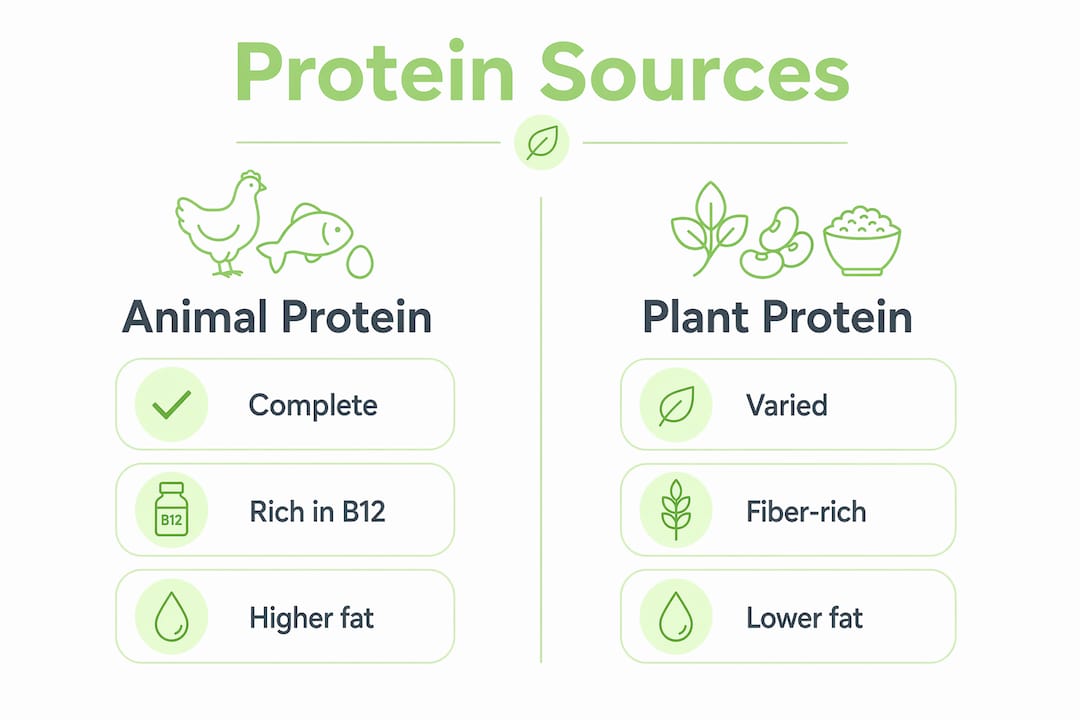
Protein comes from both animal and plant foods, and each category brings a different nutritional profile to the table.

Animal-based protein sources
Animal proteins are complete proteins, meaning they contain all nine essential amino acids in adequate amounts. Three ounces of chicken breast deliver 27 grams of protein, making it one of the most efficient sources by weight. Salmon adds omega-3 fatty acids alongside its protein content. Eggs provide roughly 6 grams each and are one of the most bioavailable sources available. Greek yogurt and cottage cheese offer protein plus calcium and probiotics. Lean beef supplies iron and B12 alongside its amino acid profile.
Plant-based protein sources
Plant proteins are equally worth your attention. Soy-based foods like edamame, tofu, and tempeh are complete proteins, covering all essential amino acids. Half a cup of cooked lentils contains 9 grams of protein plus significant fiber. Beans, chickpeas, peas, nuts, seeds, and whole grains like quinoa all contribute meaningfully to daily totals. Plant proteins provide more fiber and less saturated fat than most animal sources, which matters for long-term heart health.
Side-by-side comparison
Factor | Animal protein | Plant-based protein |
Amino acid profile | Complete in most sources | Complete in soy; varied in others |
Fiber content | None | High in legumes and whole grains |
Saturated fat | Higher in red meat and dairy | Minimal in most sources |
Key micronutrients | B12, iron, zinc, omega-3s | Magnesium, folate, potassium |
Environmental impact | Higher | Lower |
Pro Tip: Combine lentils or beans with a grain like brown rice or quinoa in the same meal. You get a full amino acid profile, substantial fiber, and a satisfying portion without relying on animal products.
The healthiest high-protein diets draw from both columns. Grilling chicken or fish instead of frying reduces added fat. Swapping one meat-based meal per day for a legume-based dish adds fiber your gut bacteria need. Green vegetable proteins also contribute to overall wellness in ways that go beyond macros alone.
Protein myths worth correcting
Several widely repeated beliefs about protein are either exaggerated or flat-out wrong. Getting these right saves you money, reduces stress around meal timing, and improves your overall diet quality.
The anabolic window is not 30 minutes. Post-workout protein timing is far less critical than fitness culture suggests. The window for muscle protein synthesis extends to roughly 24 hours after training. A normal meal eaten within a few hours of exercise is sufficient. You do not need a shake the moment you leave the gym.
Plant proteins are not incomplete in any meaningful way. The idea that plant proteins are “incomplete” and therefore inferior is outdated. Eating a variety of plant proteins throughout the day covers all essential amino acid requirements. You do not need to combine specific foods at every single meal.
Your body does not cap protein absorption at 30 grams per meal. This myth originated from short-term muscle protein synthesis studies. For most people, larger protein servings are absorbed and used effectively, though spreading intake across meals still supports older adults’ muscle maintenance.
High protein diets do not automatically mean better health. Only 5% of Americans meet fiber recommendations despite adequate protein intake. Prioritizing protein at the expense of fiber-rich vegetables, legumes, and whole grains displaces nutrients your heart and gut depend on.
Supplements are not required. Whole food sources cover protein needs for the vast majority of people. Protein powders are convenient but not superior to chicken, eggs, lentils, or Greek yogurt for building muscle or recovering from training. For those who do use supplements, natural recovery options can complement a whole-food-first approach.
Pro Tip: Track your protein intake for one week using a nutrition app before deciding whether you actually need a supplement. Most people are closer to their target than they think.
How to meet your protein needs every day
Hitting your protein target does not require complicated meal prep or expensive products. The key is building consistent habits around varied, whole food sources.
Start your day with protein. Eggs, Greek yogurt, or a smoothie with added hemp seeds or nut butter sets a strong foundation. Skipping protein at breakfast makes it harder to reach daily totals.
Build meals around a protein anchor. Choose your protein source first, then add vegetables, grains, and healthy fats around it. This applies equally to animal and plant-based meals.
Use legumes as a daily staple. Lentils, black beans, and chickpeas are inexpensive, shelf-stable, and easy to add to soups, salads, grain bowls, and wraps. They deliver protein and fiber simultaneously.
Keep protein-rich snacks accessible. Hard-boiled eggs, roasted edamame, mixed nuts, cottage cheese, and pumpkin seeds are practical between-meal options that prevent energy crashes.
Trim and grill rather than fry. Cooking method affects the overall nutritional value of your protein source. Grilling, baking, or steaming preserves protein content while limiting added fat and calories.
Monitor your full nutrient picture. Protein does not operate in isolation. Tracking amino acids, fiber, iron, and B12 alongside your macros gives you a clearer view of where gaps exist. Tools like Bimiapp monitor over 60 nutrients including individual amino acids, so you can see exactly which ones you are consistently missing.
For anyone building or adjusting a high protein diet, variety is the most practical strategy. Rotating between chicken, salmon, eggs, lentils, tofu, and Greek yogurt across the week covers amino acids, micronutrients, and dietary fiber without requiring a nutrition degree.
Key takeaways
Protein needs vary by age, activity level, and health goal, and the updated 1.2 to 1.6 g/kg/day range is the right target for most active adults.
Point | Details |
Updated intake range | Target 1.2 to 1.6 g/kg/day for active adults, not the old 0.8 g/kg RDA. |
Animal vs. plant protein | Both are effective; plant sources add fiber and reduce saturated fat intake. |
Timing myths | The post-workout window lasts 24 hours, so immediate supplementation is unnecessary. |
Fiber gap | High protein diets often displace fiber; prioritize legumes and vegetables alongside protein. |
Track full nutrients | Monitoring amino acids and co-nutrients reveals gaps that total protein counts miss. |
Why protein obsession misses the bigger picture
Fitness culture has a habit of turning protein into a single-number scorecard. Hit your grams, win the day. I have seen this mindset lead people to eat chicken breast three times a day while ignoring the fact that they have not eaten a vegetable since Tuesday.
The science is clear: protein matters, and most active people do need more than the old 0.8 g/kg RDA. But the obsession with protein as a standalone metric creates blind spots. When you chase grams without tracking fiber, magnesium, or B12, you often end up with a diet that looks good on paper and performs poorly in practice.
What I find more useful is thinking about protein sources rather than protein numbers. A diet built around eggs, lentils, salmon, Greek yogurt, tofu, and seeds will almost always hit the right protein range naturally. It will also deliver the micronutrients and fiber that a chicken-and-protein-shake approach consistently misses. The micronutrient picture matters as much as the macro total.
Aging changes this calculation further. After 50, muscle protein synthesis becomes less efficient, which means older adults genuinely need more protein per kilogram than younger people. That is not a fitness trend. It is physiology. Adjusting intake as you age, rather than sticking to a number you set at 30, is one of the most practical things you can do for long-term health.
My honest recommendation: stop optimizing for a single number and start building a diet with enough variety that the numbers take care of themselves.
— Alvi
Track your protein and every nutrient behind it
Knowing your protein target is one thing. Knowing whether you are actually hitting it, along with your fiber, amino acids, iron, and B12, is another.

Bimiapp tracks over 60 nutrients, including all essential amino acids, so you can see exactly where your diet stands. Use the AI photo recognition to log meals in seconds, check your personalized protein recommendations based on your weight and activity level, and spot deficiencies before they affect your health. Whether you eat mostly animal proteins, follow a plant-based approach, or mix both, Bimiapp gives you the full picture. See how it works and start tracking today.
FAQ
What is the recommended daily protein intake?
The standard RDA is 0.8 g per kilogram of body weight, but updated guidelines recommend 1.2 to 1.6 g/kg/day for active adults and older individuals. For a 150-pound person, that means roughly 80 to 110 grams per day.
What are the signs of protein deficiency?
Protein deficiency symptoms include muscle loss, fatigue, slow wound healing, brittle nails, and increased susceptibility to illness. Severe deficiency is rare in developed countries but can occur in older adults with poor appetite or highly restrictive diets.
Is plant-based protein as effective as animal protein?
Yes. Eating a variety of plant proteins throughout the day covers all essential amino acids and supports muscle building. Soy-based foods like tofu, tempeh, and edamame are complete proteins on their own.
Do you need a protein shake after a workout?
No. The muscle protein synthesis window extends to about 24 hours after training, so a normal meal eaten within a few hours of exercise is sufficient. Whole food sources are equally effective for most people.
How do animal and plant proteins differ nutritionally?
Animal proteins are typically complete and higher in B12, iron, and zinc. Plant proteins provide more fiber and less saturated fat. A diet that includes both categories covers the widest range of nutrients.
Recommended
Comments