
What Is Nutrient Absorption and How It Works


TL;DR:
Nutrient absorption transfers vitamins, minerals, and macronutrients from the gut to your bloodstream. The small intestine’s large surface area makes it the primary site, and absorption efficiency varies based on gut health and food preparation. Improving diet and gut health can significantly enhance nutrient uptake and overall nutrition.
Nutrient absorption is defined as the process by which your digestive system extracts vitamins, minerals, macronutrients, and other compounds from food and delivers them to your cells. The small intestine/03%3A_Digestion/3.03%3A_Digestion_and_Absorption) is the primary site, with a surface area greater than 200 square meters enabling it to absorb nearly all ingested food. Without this process working efficiently, eating well simply is not enough. Your cells receive only what your gut successfully transfers into the bloodstream or lymphatic system.
What is nutrient absorption and how does it happen?
Nutrient absorption is the biological transfer of digested compounds from the gut lining into circulation. Digestion prepares nutrients for this transfer through two parallel processes: mechanical and chemical. Mechanical digestion physically breaks food into smaller pieces through chewing and stomach churning. Chemical digestion uses enzymes and acids to reduce those pieces into molecules small enough to cross the intestinal wall.
Enzymes are the core drivers of chemical digestion. Amylase breaks down carbohydrates into simple sugars. Lipase splits dietary fats into fatty acids and glycerol. Protease cleaves proteins into amino acids. Without sufficient enzyme activity, nutrients pass through the gut intact and exit the body unused. Enzyme deficiency directly causes malabsorption, regardless of how nutritious your diet is.
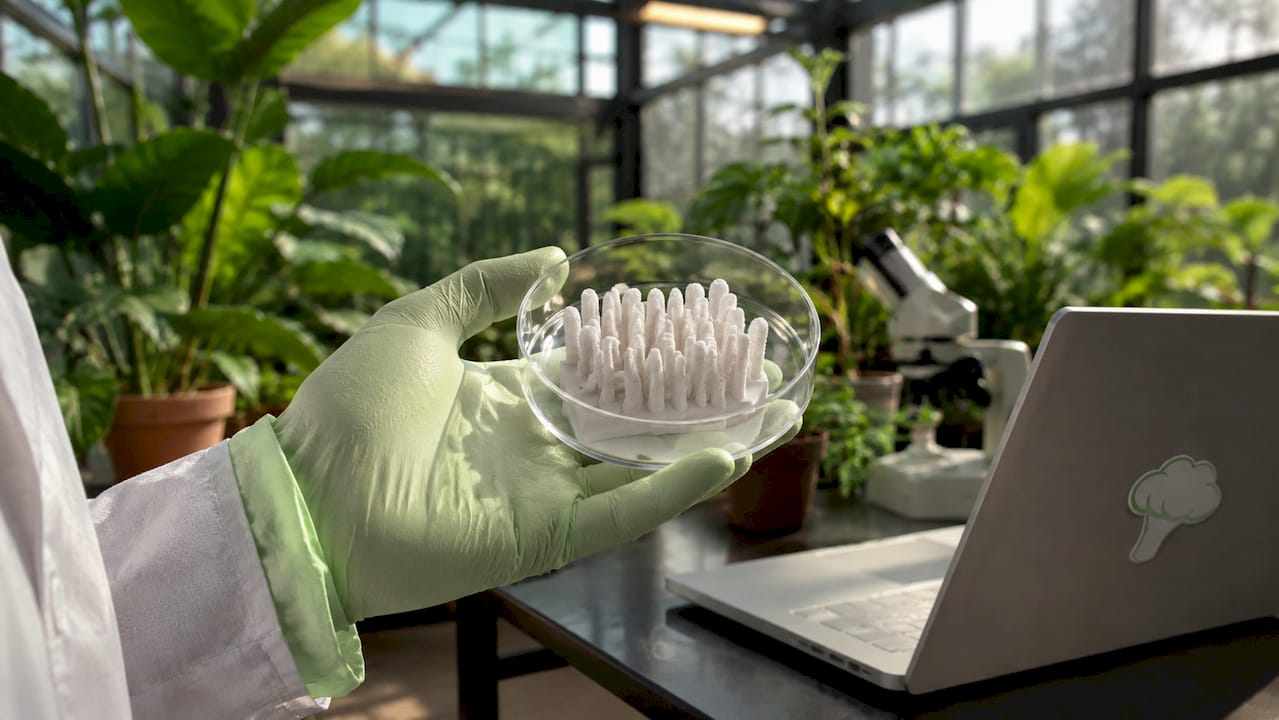
The small intestine handles the bulk of absorption. Its inner wall is lined with finger-like projections called villi, and each villus is covered with even smaller projections called microvilli. Together, these structures create a surface area exceeding 200 square meters/03%3A_Digestion/3.03%3A_Digestion_and_Absorption), roughly the size of a tennis court. That surface area is what makes rapid, large-scale absorption possible.
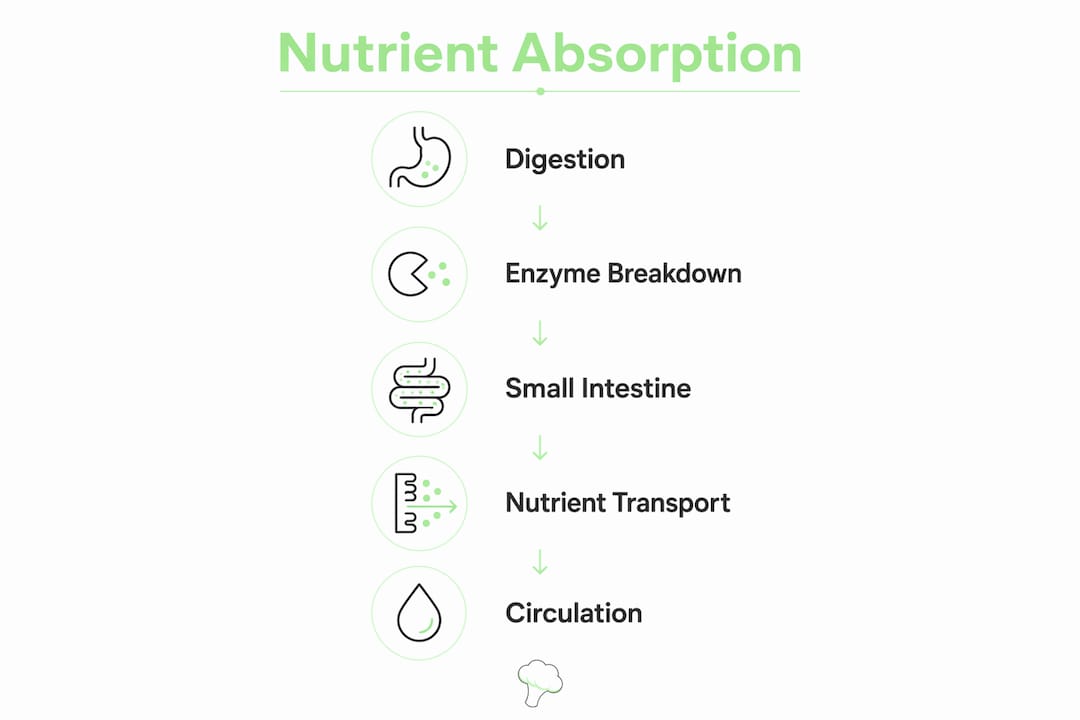
Once nutrients cross the intestinal wall, they travel through one of two routes. Water-soluble nutrients, including B vitamins, vitamin C, amino acids, and simple sugars, pass directly into blood capillaries. Fat-soluble nutrients, including vitamins A, D, E, and K along with fatty acids, enter the lymphatic vessels first before reaching the bloodstream. The small intestine also absorbs 80% of electrolytes and 90% of water/03%3A_Digestion/3.03%3A_Digestion_and_Absorption) consumed daily. That figure shows how central this organ is to your entire fluid and mineral balance.
Pro Tip: Chewing food thoroughly is one of the simplest ways to improve absorption. Smaller food particles expose more surface area to digestive enzymes, increasing the efficiency of chemical breakdown before food even reaches the small intestine.
Why does nutrient absorption vary from person to person?
Two people can eat the same meal and absorb meaningfully different amounts of nutrients. This variability is real, measurable, and driven by several biological factors.
Gut transit time is one of the biggest variables. The time food spends moving through the small intestine ranges from 2 to 10 hours among healthy adults. Slower transit generally increases nutrient harvesting because food stays in contact with the absorptive surface longer. Faster transit reduces contact time and can lower absorption efficiency.
The gut microbiome also shapes absorption outcomes. Your gut contains trillions of bacteria that influence how nutrients are extracted, modified, and made available to the body. Individual gut environments produce unique nutritional outcomes even from identical diets. Two people eating the same foods can end up with different blood levels of key nutrients based on microbiome composition alone.
Bioavailability is the concept that ties these variables together. It describes the fraction of an ingested nutrient that actually reaches the bloodstream in a usable form. Bioavailability is shaped by the food matrix, cooking methods, nutrient interactions, and individual physiology. A nutrient listed on a food label may be present in large amounts but absorbed at a fraction of that quantity.
Several key factors reduce absorption efficiency:
Antinutrients: Phytates in grains and legumes bind to iron, zinc, and calcium, blocking their uptake.
Disease: Celiac disease damages intestinal villi, reducing absorptive surface. Crohn’s disease and pancreatic insufficiency disrupt both digestion and transport.
Enzyme deficiency: Low lipase or amylase output means fats and carbohydrates are not fully broken down before they reach the colon.
Age: Enzyme production and gut motility both decline with age, reducing overall absorption capacity.
Medications: Proton pump inhibitors reduce stomach acid, impairing absorption of vitamin B12, magnesium, and iron.
“Nutrient labels overestimate what your body actually receives. Bioavailability and absorption efficiency must be considered for accurate nutritional assessments.” — Frontiers in Nutrition
This is why micronutrient deficiencies affect roughly 29% of the global population, or 1.2 billion people, despite adequate food access in many regions. The problem is often absorption, not intake.
What nutrients are absorbed where and how?
Absorption is not uniform across the gut. Different nutrients are taken up at specific locations, using distinct mechanisms.
Nutrient | Primary absorption site | Mechanism |
Simple sugars (glucose, fructose) | Duodenum and jejunum | Active transport and facilitated diffusion |
Amino acids | Jejunum | Active transport via sodium-dependent carriers |
Fatty acids and glycerol | Jejunum | Bile salt micelle formation, passive diffusion |
Vitamin B12 | Ileum | Requires intrinsic factor from the stomach |
Iron | Duodenum | Active transport, regulated by body iron stores |
Calcium | Duodenum and jejunum | Active transport, vitamin D dependent |
Short-chain fatty acids | Colon | Passive diffusion from microbial fermentation |
Water | Small intestine and colon | Osmosis |
The jejunum handles the largest volume of macronutrient absorption. The ileum specializes in vitamin B12 and bile salt recapture. The colon, often overlooked, plays a real metabolic role. Gut bacteria ferment indigestible fiber there, producing short-chain fatty acids that contribute up to 10% of daily calories. That contribution is not reflected on any nutrition label.
Fat absorption depends heavily on bile salts produced by the liver and stored in the gallbladder. Bile salts emulsify dietary fats into tiny droplets called micelles, making them accessible to lipase and small enough to cross the intestinal wall. Without adequate bile, fat absorption drops sharply, and fat-soluble vitamins go with it.
Protein and lipid absorption reach 95–98% and 95% efficiency, respectively, by the time digested food leaves the small intestine. Carbohydrate absorption is similarly high for digestible starches and sugars. Micronutrient absorption is far more variable, often sitting well below 50% for minerals like iron and zinc depending on the food source and dietary context.
Pro Tip: Pair iron-rich plant foods with vitamin C sources at the same meal. Vitamin C converts iron into a form your gut absorbs more readily, a clear example of how food synergy directly affects absorption outcomes.
How can you improve your nutrient absorption through diet?
Absorption efficiency is not fixed. Diet choices, food preparation, and lifestyle habits all shift how much your body actually takes in.
Dietary strategies that raise bioavailability:
Cook your vegetables. Heat breaks down cell walls and deactivates some antinutrients, making nutrients more accessible. Cooked tomatoes release more lycopene than raw ones.
Soak and ferment grains and legumes. Soaking reduces phytate content, which directly increases mineral absorption from those foods.
Add healthy fats to vegetables. Fat-soluble vitamins A, D, E, and K require dietary fat to be absorbed. A drizzle of olive oil on a salad is not just flavor; it is a delivery mechanism.
Separate calcium and iron intake. Calcium competes with iron for the same transport proteins. Eating them together at high doses reduces absorption of both.
Eat fermented foods. Yogurt, kefir, kimchi, and sauerkraut support a diverse gut microbiome, which improves overall nutrient extraction.
Digestive health is the foundation of absorption. Chronic stress raises cortisol, which slows gut motility and reduces enzyme secretion. Poor sleep disrupts gut barrier function. Both reduce the efficiency of the nutrient absorption process. Staying well hydrated supports gut transit time and the fluid environment enzymes need to function.
Tracking what you eat gives you data to act on. Generic calorie counts miss the absorption picture entirely. Monitoring specific nutrients, including vitamins, minerals, and fatty acids, reveals gaps that food choices alone cannot explain. Tools that track nutrient interactions help you spot patterns, such as consistently low magnesium despite eating magnesium-rich foods, that point to an absorption issue rather than a dietary gap.
Pro Tip: Vitamin D status directly controls calcium absorption in the gut. If your calcium intake looks adequate but your bone health is poor, check your vitamin D level before adding more calcium to your diet.
Key Takeaways
Nutrient absorption is the process that determines how much of what you eat your body actually uses, and it varies significantly based on gut physiology, microbiome composition, food preparation, and bioavailability.
Point | Details |
Small intestine is central | Its surface area exceeds 200 square meters, enabling absorption of nearly all macronutrients and most micronutrients. |
Absorption rates vary by nutrient | Proteins and lipids absorb at 95–98% efficiency; micronutrients like iron absorb at far lower rates depending on context. |
Bioavailability explains the gap | The fraction of a nutrient that reaches your bloodstream depends on food matrix, preparation, and individual physiology. |
Gut microbiome matters | Individual microbiome composition shifts how much energy and nutrients you extract from identical foods. |
Diet choices shift outcomes | Food pairing, cooking methods, and antinutrient management all measurably improve or reduce absorption efficiency. |
Why I think most people are solving the wrong nutrition problem
Most people who want to eat better focus on what to eat. They count calories, track macros, and read ingredient labels. That is not wrong. But it addresses only half the equation.
The half most people ignore is absorption. You can eat a diet rich in iron, calcium, and B vitamins and still be deficient if your gut is not absorbing those nutrients efficiently. Celiac disease is the obvious example, but the same principle applies at a subclinical level to millions of people who have no diagnosed condition. Their gut transit time is fast, their enzyme output is low, or their microbiome is not set up to extract what their diet provides.
What I find most striking about the current research is how individual this process is. Transit time alone varies fivefold among healthy adults. That means two people eating the same meal in the same restaurant can end up with meaningfully different nutritional outcomes. Counting calories as if they were fixed quantities ignores this entirely.
The practical shift I would encourage is moving from “what am I eating” to “what is my body actually receiving.” That means paying attention to food preparation, nutrient pairing, gut health, and tracking specific micronutrients over time. A number on a nutrition label is a starting point, not a guarantee.
— Alvi
Bimiapp tracks the nutrients your body actually needs
Knowing how absorption works is useful. Knowing which specific nutrients you are consistently missing is what drives real change.

Bimiapp tracks over 60 nutrients, including vitamins, minerals, amino acids, and fatty acids, giving you a detailed picture of your nutritional intake beyond basic macros. The AI-powered food recognition captures meals from photos, estimates portions, and analyzes nutrient content in seconds. Personalized recommendations adjust to your age, weight, BMI, and activity level, so the targets you see reflect your actual physiology. The Meals Vault stores your data locally and generates trend reports so you can see patterns over time. Start building a clearer picture of your nutrition at Bimiapp.
FAQ
What is nutrient absorption in simple terms?
Nutrient absorption is the process by which your gut transfers vitamins, minerals, and macronutrients from digested food into your bloodstream and cells. The small intestine handles most of this transfer.
Where does most nutrient absorption take place?
Most absorption occurs in the small intestine, specifically the jejunum and ileum. The small intestine’s surface area exceeds 200 square meters, making it the body’s primary site for nutrient uptake.
What are the signs of poor nutrient absorption?
Common signs include fatigue, hair loss, brittle nails, frequent illness, and digestive issues like bloating or loose stools. These symptoms often reflect deficiencies in iron, zinc, B12, or fat-soluble vitamins caused by absorption problems rather than low dietary intake.
What factors affect how well you absorb nutrients?
Gut transit time, microbiome composition, enzyme availability, food preparation methods, and conditions like celiac disease or pancreatic insufficiency all affect absorption efficiency. Antinutrients in foods like phytates and oxalates also reduce mineral uptake.
Can you improve nutrient absorption through diet alone?
Diet choices significantly improve absorption. Pairing vitamin C with plant-based iron, eating fat with fat-soluble vitamins, soaking legumes, and supporting gut microbiome diversity through fermented foods all raise bioavailability without requiring supplements.
Recommended
Comments