
Personalized Micronutrient Needs: Your 2026 Guide


TL;DR:
Personalized micronutrient needs are based on biological data like blood biomarkers and genetics, not on population averages. Blood tests for vitamin D, ferritin, B12, and folate provide reliable baseline information to guide supplementation. Continuous testing and adjustment are essential because individual requirements change over time and with health status.
Explaining personalized micronutrient needs starts with one core principle: your body’s nutrient requirements are not the same as anyone else’s. Personalized nutrition is defined as tailoring dietary recommendations based on at least one biological component, such as genetics or metabolic biomarkers. Generic multivitamins and population-level RDAs give you an average. Biological data gives you accuracy. Tools like blood panels, genetic markers, and platforms like Bimiapp make individual micronutrient requirements measurable and trackable in ways that questionnaires simply cannot match.
What are personalized micronutrient needs and why do they matter?
Personalized micronutrient needs are individualized nutritional requirements determined by your unique biology, not by population averages. Two people eating identical diets can have vastly different vitamin D, iron, or B12 levels. That gap exists because absorption, metabolism, and utilization vary based on genetics, gut health, age, and health status.

The importance of personalized nutrition becomes clear when you look at outcomes. Generic supplementation often misses the mark because it addresses the average, not the individual. A person with an MTHFR gene variant, for example, cannot convert standard folic acid efficiently. That person needs methylfolate, a distinction no generic supplement label will tell you.
Biological data must anchor any credible personalization effort. Lifestyle questionnaires and symptom checklists are starting points at best. They cannot tell you whether your ferritin is low, your 25-hydroxyvitamin D is deficient, or your B12 is borderline. Only lab work does that.
How do blood biomarkers identify your nutrient deficiencies?
Blood biomarkers are the most reliable starting point for identifying individual micronutrient requirements. They give you a direct measurement of what is actually circulating and stored in your body, not what you think you are eating.
The most clinically useful biomarkers for micronutrient status include:
25-hydroxyvitamin D: the standard marker for vitamin D status; levels below 20 ng/mL indicate deficiency
Ferritin: the best indicator of iron stores, more informative than serum iron alone
Serum B12 and methylmalonic acid: together these confirm functional B12 status, not just circulating levels
Red blood cell folate: a more accurate picture of long-term folate status than serum folate
Zinc and copper: often tested together since they compete for absorption
NHANES measures up to 31 nutritional biomarkers through blood and urine samples, providing nationally representative reference data. That breadth shows how many distinct markers are needed to build a complete picture of nutritional status.
Standard annual checkups rarely include this full panel. You may need to request specific tests or work with a functional medicine provider to get comprehensive results. Precision nutrition frameworks now advocate for multi-metabolite analysis, measuring folate forms, B12, SAM/SAH ratios, and related markers together rather than relying on a single number. That approach catches deficiencies that single-marker testing misses.
Pro Tip: Ask your doctor for a full micronutrient panel that includes ferritin, 25-hydroxyvitamin D, serum B12, methylmalonic acid, and red blood cell folate. A standard metabolic panel will not cover these.
Biomarker | What it measures | Why it matters |
25-hydroxyvitamin D | Vitamin D storage status | Deficiency is widespread and affects immunity, bone, and mood |
Ferritin | Iron stores | Low ferritin causes fatigue before anemia appears |
Serum B12 + methylmalonic acid | Functional B12 status | Serum B12 alone can appear normal while function is impaired |
Red blood cell folate | Long-term folate status | More stable than serum folate, less affected by recent meals |
Zinc | Zinc tissue status | Deficiency impairs immune function and wound healing |
How do genetics and microbiome data refine your nutrient plan?
Genetics and gut microbiome data add a second layer of precision on top of biomarker results. They explain why your levels are where they are, not just what those levels are.
Key genetic variants that affect micronutrient metabolism include:
MTHFR (C677T, A1298C): reduces the enzyme that converts folate to its active form; carriers need methylfolate, not folic acid
VDR polymorphisms: affect how efficiently your body uses vitamin D; some variants require higher intake to reach the same serum level
FUT2: influences B12 absorption in the gut; certain variants are associated with lower B12 status regardless of dietary intake
BCMO1: affects beta-carotene conversion to vitamin A; poor converters cannot rely on plant sources alone
The gut microbiome influences nutrient absorption and even synthesis. Certain bacteria produce vitamin K2 and short-chain fatty acids that affect mineral absorption. Disrupted microbiome composition, from antibiotics, chronic stress, or poor diet, can reduce absorption of magnesium, zinc, and B vitamins.
Contextual factors like age, medication use, and pregnancy interact with both genetics and microbiome status. Metformin depletes B12. Proton pump inhibitors reduce magnesium and B12 absorption. Pregnancy dramatically increases folate, iron, and iodine needs.
Pro Tip: Genetic testing for MTHFR and VDR variants is worth considering if your vitamin D or folate levels remain low despite supplementation. Results help explain why standard doses are not working.
Microbiome testing is still emerging as a clinical tool. Current evidence supports its use as a complement to biomarker data, not a replacement. Self-reported dietary data is often inaccurate because people underestimate intake and overestimate diet quality. Biological data, whether from blood or stool, removes that guesswork entirely.
What safety limits apply to personalized micronutrient supplementation?
Safety is the part of personalized nutrition that most supplement marketing ignores. More is not always better, and fat-soluble vitamins make that point clearly.
Follow these steps to build a safe, personalized supplementation approach:
Establish your baseline first. Get blood work done before starting any new supplement. You cannot correct a deficiency you have not confirmed, and you cannot avoid toxicity without knowing your starting level.
Respect upper limits for fat-soluble vitamins. Vitamins A, D, E, and K accumulate in body fat and liver tissue. Vitamin D above 100 mcg per day (4,000 IU) carries risks of hypercalcemia and kidney stones. Harvard Health notes this limit applies even when a person feels well.
Retest after 8–12 weeks of supplementation. Biomarker normalization rates vary widely. Vitamin D levels respond within weeks. Iron stores take months. Retesting confirms whether your dose is working and whether it needs adjustment.
Adjust based on results, not symptoms alone. Symptoms like fatigue or brain fog overlap across many deficiencies. Only biomarker data tells you which nutrient is actually low and whether your intervention is working.
Work with a qualified professional for complex cases. Genetic variants, multiple medications, or chronic conditions require professional interpretation. A registered dietitian or functional medicine physician can read your full picture.
“Personalized micronutrient needs should be viewed as dynamic and optimized iteratively through sequential biomarker testing and monitoring.” — MDPI personalized nutrition research, 2026
Iterative monitoring is what separates a real personalized nutrition plan from a one-time supplement purchase. Your needs change as your diet, health status, season, and age change. A plan built on a single blood draw from three years ago is already outdated.
Pro Tip: Schedule biomarker retesting at consistent intervals, ideally every 3–6 months when actively correcting a deficiency, and annually for maintenance. Log your supplement doses and dietary changes between tests so you can connect cause and effect.
How to identify your individual micronutrient requirements step by step
Identifying your customized nutrient needs requires combining biological data with context. Here is how to do it accurately.
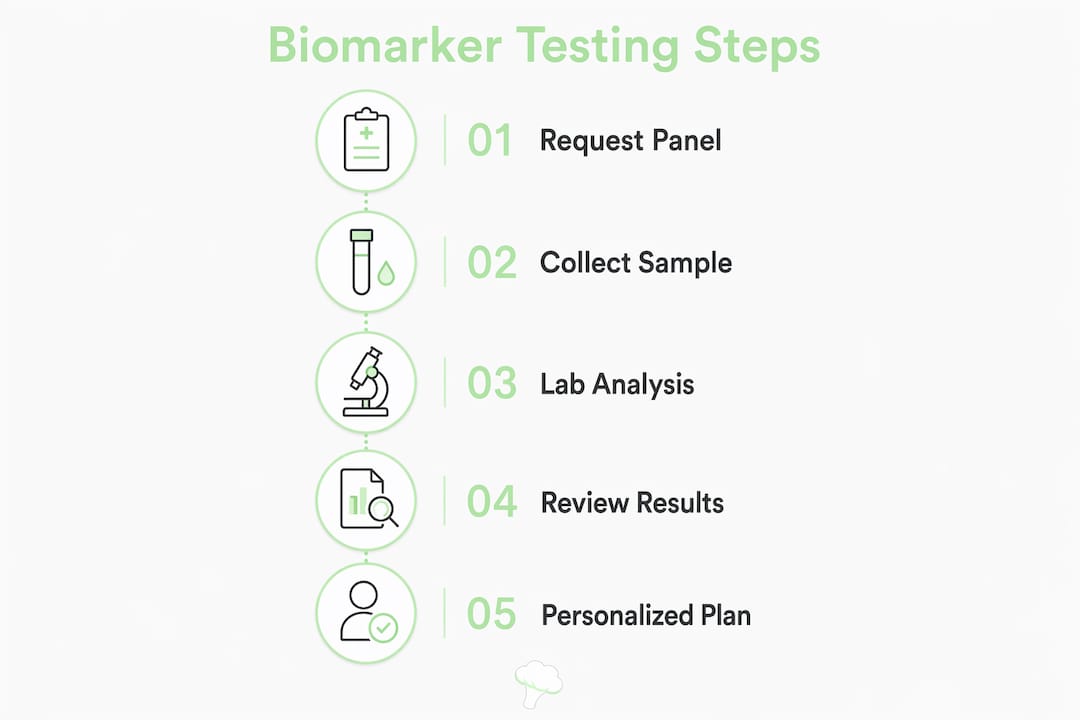
Get a comprehensive blood panel. Request markers beyond the standard metabolic panel: 25-hydroxyvitamin D, ferritin, serum B12, methylmalonic acid, red blood cell folate, zinc, copper, and a complete blood count. This is your biological baseline.
Add genetic context if relevant. If your levels remain abnormal despite dietary changes, genetic testing for MTHFR, VDR, FUT2, or BCMO1 variants can explain why. Genetic data is most useful when paired with biomarker results, not used alone.
Account for life stage and medications. Age, pregnancy, and prescription drugs all shift micronutrient needs. Medication use and gut microbiome composition are among the contextual factors that must inform any tailored micronutrient plan.
Distinguish deficiency correction from optimization. Correcting a confirmed deficiency requires higher doses for a defined period. Optimization for someone already in normal range requires smaller, targeted adjustments. These are different goals with different protocols.
Use a nutrient tracking tool. Platforms like Bimiapp track over 60 nutrients, including vitamins, minerals, amino acids, and fatty acids, giving you a running record of intake alongside your biomarker trends. That combination is what makes a nutritional needs assessment actionable rather than theoretical.
Approach | Biological input | Reliability | Best use case |
Blood biomarker panel | High | High | Primary baseline for all personalization |
Genetic testing | Moderate | Moderate | Explaining persistent abnormal levels |
Microbiome testing | Emerging | Moderate | Absorption and gut health context |
Symptom questionnaire | None | Low | Initial screening only |
Dietary recall | Self-reported | Low | Rough intake estimate, not diagnostic |
Explainable AI systems now link symptoms, nutrients, and validated RDA targets to generate recommendations that are both personalized and transparent. That kind of structured approach improves trust in the output because you can see exactly why each recommendation was made.
Key Takeaways
Personalized micronutrient needs are determined by biological data, including blood biomarkers, genetics, and microbiome status, not by population averages or self-reported diet logs.
Point | Details |
Biomarkers are the foundation | Blood tests for vitamin D, ferritin, B12, and folate give the most reliable baseline for personalization. |
Genetics explain persistent gaps | Variants like MTHFR and VDR explain why standard doses fail for some people. |
Fat-soluble vitamins need limits | Vitamin D above 100 mcg per day risks hypercalcemia and kidney stones; always retest before increasing. |
Iterative monitoring is required | Retest every 3–6 months when correcting deficiencies; a single blood draw is not a plan. |
Context changes your needs | Age, pregnancy, and medications shift micronutrient requirements and must factor into any tailored plan. |
Why most personalized nutrition advice still misses the mark
The supplement industry has latched onto the word “personalized” and applied it to products built on nothing more than a lifestyle quiz. I have reviewed dozens of these programs, and the pattern is consistent: a few questions about energy levels and diet habits, followed by a custom supplement pack that looks tailored but is actually just a standard formula with your name on the label.
Real personalization is harder and slower. It requires a blood draw, a few weeks of waiting for results, and a willingness to adjust your approach based on what the data actually shows. Most people want a shortcut. The quiz-based model sells well precisely because it feels personalized without requiring any real biological input.
The other mistake I see constantly is treating a single test result as a permanent truth. Your vitamin D level in january is not your vitamin D level in july. Your ferritin after a period of heavy training is not your ferritin at rest. Sequential biomarker testing is the only way to see whether your interventions are actually working. One data point is a snapshot. A series of data points is a story you can act on.
The people who get the most out of personalized nutrition are the ones who treat it as an ongoing process, not a one-time purchase. They test, adjust, retest, and refine. That cycle is less exciting than a 30-day supplement challenge, but it is the only approach that actually works.
— Alvi
Bimiapp tracks the nutrients your blood work reveals
Knowing your biomarker results is step one. Tracking whether your diet and supplements are actually moving those numbers is step two.

Bimiapp monitors over 60 nutrients, including the vitamins, minerals, and fatty acids most relevant to micronutrient deficiency correction. The platform uses AI-powered food recognition to log meals quickly, then maps your intake against personalized targets based on your age, weight, BMI, and activity level. The Meals Vault stores your data locally so you can review trends over weeks and months, not just today’s numbers. If you want to connect your daily nutrient intake to the biomarker results your doctor provides, Bimiapp gives you the tracking layer that makes that connection visible and useful.
FAQ
What is the definition of personalized micronutrient needs?
Personalized micronutrient needs are individualized nutrient requirements determined by biological data such as blood biomarkers, genetics, and gut microbiome status. They differ from population-level RDAs because they account for how your specific body absorbs, metabolizes, and uses each nutrient.
Which blood tests are most useful for identifying nutrient deficiencies?
The most informative tests include 25-hydroxyvitamin D, ferritin, serum B12 with methylmalonic acid, red blood cell folate, and zinc. Standard annual checkups rarely include all of these, so you may need to request them specifically.
Is it safe to take high-dose vitamin D supplements without testing?
No. Vitamin D is fat-soluble and accumulates in tissue. Doses above 100 mcg per day risk hypercalcemia and kidney stones. Always confirm your baseline level before supplementing and retest after 8–12 weeks.
How often should I retest my micronutrient biomarkers?
Retest every 3–6 months when actively correcting a deficiency, and annually once your levels are stable. Normalization rates vary by nutrient, so timing your retest correctly matters for accurate interpretation.
Can a genetic test replace a blood test for micronutrient planning?
No. Genetic testing explains why your levels may be abnormal but does not measure your current status. Blood biomarkers and genetic data work best together, with biomarkers as the primary input and genetics as supporting context.
Recommended
Comments