
The Role of Magnesium in Diet: Your 2026 Health Guide


TL;DR:
Magnesium is an essential mineral that supports energy production, muscle and nerve functions, and heart rhythm regulation. Most people do not consume enough magnesium due to processed diets, underscoring the importance of tracking intake with tools like Bimiapp. Proper dietary habits, such as choosing whole grains, nuts, legumes, and minimally processed vegetables, ensure adequate magnesium levels without supplements.
Magnesium is defined as an essential mineral that acts as a cofactor in over 300 enzyme systems, supporting protein synthesis, muscle and nerve function, blood glucose control, and blood pressure regulation. The role of magnesium in diet is not a minor detail. It is a foundational requirement for energy production, normal heart rhythm, and bone structure. Yet most people have no idea how much they are getting or whether it is enough. Tools like Bimiapp now make it possible to track your magnesium intake daily, alongside 60+ other nutrients, so you can see exactly where your diet stands.
What physiological functions does magnesium support?
Magnesium drives energy production at the cellular level. It participates in both glycolysis and oxidative phosphorylation, the two main pathways your body uses to generate ATP. Without adequate magnesium, your cells cannot produce energy efficiently.
Muscle contraction and nerve impulse conduction both depend on magnesium’s role in ion transport. Magnesium regulates calcium and potassium movement across cell membranes. That balance controls how muscles contract and how nerve signals fire. When magnesium is low, this balance breaks down, which is why muscle cramps and nerve sensitivity are early warning signs.
Cardiovascular regulation is another direct function. Magnesium helps maintain normal heart rhythm by stabilizing electrical activity in cardiac cells. The NIH Office of Dietary Supplements confirms that magnesium is required for normal heart rhythm via ion transport. That is not a minor role. It is the reason cardiologists monitor magnesium levels in hospitalized patients.
Blood sugar regulation also ties directly to magnesium. The mineral supports insulin receptor function and glucose uptake in cells. Low magnesium is consistently associated with impaired insulin sensitivity.
Key physiological roles at a glance:
Energy metabolism: Required for ATP synthesis in every cell
Muscle function: Controls contraction and relaxation cycles
Nerve signaling: Regulates ion transport across membranes
Heart rhythm: Stabilizes cardiac electrical activity
Blood sugar control: Supports insulin receptor function
Bone structure: About 60% of the body’s magnesium is stored in bone
Pro Tip: If you track your nutrition with Bimiapp, check your magnesium trend over 7 days, not just a single day. One low day is normal. A consistent shortfall signals a real gap worth addressing.
Which foods are the best sources of dietary magnesium?
Green leafy vegetables, legumes, nuts, seeds, whole grains, and some fortified foods are the top dietary sources of magnesium. Spinach, black beans, almonds, pumpkin seeds, and brown rice all deliver meaningful amounts per serving. Fortified breakfast cereals can also contribute, though they vary widely by brand.

Magnesium absorption from food averages 30–40%. That means even a magnesium-rich meal delivers less than half of what is listed on a nutrition label. Bioavailability varies based on the food matrix, fiber content, and gut health.
Food processing is a major factor that most people overlook. Refining grains strips away the magnesium-rich bran and germ layers. White bread and white rice contain a fraction of the magnesium found in their whole-grain counterparts. Choosing minimally processed foods is one of the most reliable ways to raise your intake.
Cooking method matters too. Long boiling in excess water causes significant magnesium loss. Steaming, sautéing, or quick cooking with minimal water preserves more of the mineral. This applies especially to leafy greens and legumes.
Food | Magnesium content (approx.) | Cooking impact |
Pumpkin seeds (1 oz) | ~150 mg | Minimal loss when dry-roasted |
Spinach, cooked (½ cup) | ~78 mg | Boiling reduces content; steam instead |
Black beans, cooked (½ cup) | ~60 mg | Draining cooking water reduces loss |
Almonds (1 oz) | ~80 mg | No cooking needed |
Brown rice, cooked (1 cup) | ~84 mg | Minimal loss with standard cooking |
White rice, cooked (1 cup) | ~19 mg | Refining removes most magnesium |
Pro Tip: Log your meals in Bimiapp using photo recognition to see your magnesium content per meal in real time. You may find that swapping white rice for brown rice alone closes a meaningful gap in your daily target.
Key habits that protect magnesium in your food:
Choose whole grains over refined grains every time
Steam or sauté vegetables rather than boiling them in large amounts of water
Eat nuts and seeds raw or lightly roasted
Drain and rinse canned legumes to reduce sodium, but note that cooking liquid also carries some magnesium
What are the symptoms and risks of magnesium deficiency?
Magnesium deficiency symptoms are often nonspecific, which makes them easy to miss. Lethargy, muscle cramps, and weakness are the most common early signs. These symptoms overlap with dozens of other conditions, so deficiency often goes unrecognized for months.
Severe deficiency produces more distinct signs. Tremors, neuromuscular irritability, and ECG abnormalities all indicate that magnesium levels have dropped to a clinically significant level. At that stage, the cardiovascular and nervous systems are both affected.
“Magnesium deficiency can present a broad spectrum of issues because it is involved in multiple body systems including metabolism, neuromuscular function, and cardiovascular health.” — Hypomagnesemia: A Clinical and Nutritional Update
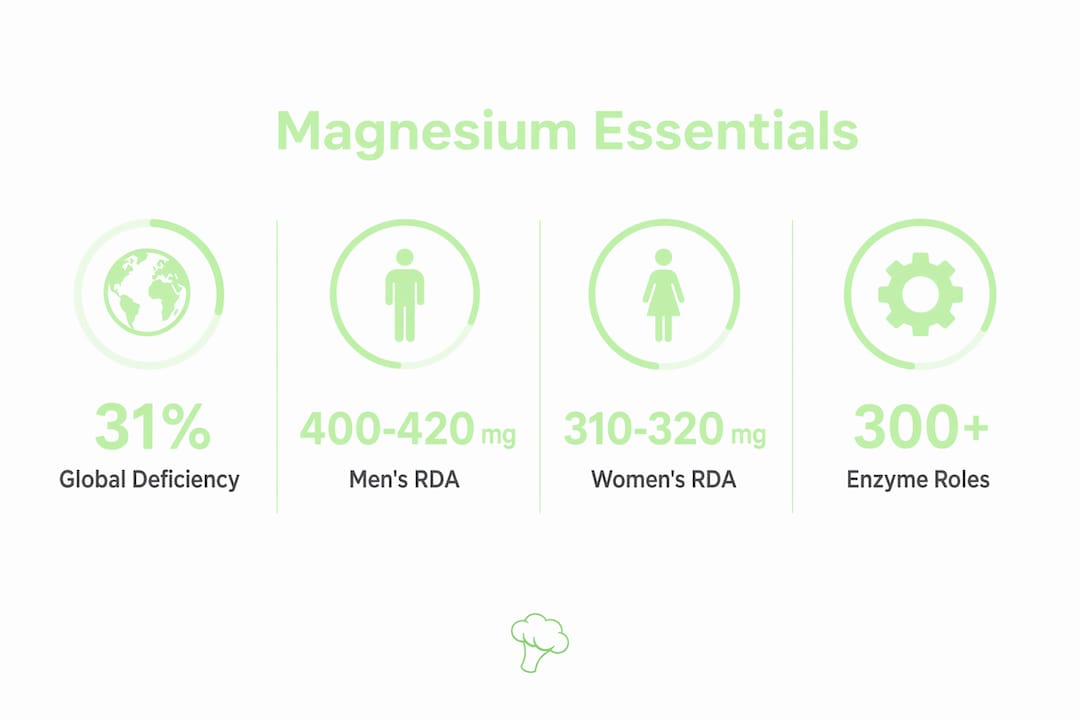
Globally, about 31% of people do not meet recommended magnesium intake. That figure reflects how common dietary shortfalls are, not rare clinical disease. In China specifically, 64.4% of adults consume less than the estimated average requirement for magnesium. Diets low in whole grains and vegetables are the primary driver worldwide.
Detection is harder than most people expect. Serum magnesium is an insensitive biomarker because it does not reflect total body stores accurately. The body maintains serum levels by pulling magnesium from bone and muscle, so a normal blood test does not rule out a functional deficiency. Clinicians assess magnesium status by combining symptoms, risk factors, and lab values together.
Groups at higher risk include:
People with gastrointestinal conditions like Crohn’s disease or celiac disease
Those taking proton pump inhibitors or certain diuretics
Individuals with type 2 diabetes, due to increased urinary magnesium loss
Older adults, who absorb less magnesium and often eat less overall
People who rely heavily on processed and refined foods
Tracking your magnesium deficiency symptoms alongside your dietary intake gives you a fuller picture than either approach alone.
How much magnesium do adults need, and when are supplements necessary?
The recommended dietary allowance for magnesium is 400–420 mg per day for men and 310–320 mg per day for women. These targets apply to total intake from food. Most adults in the United States fall short of these amounts through diet alone.
Supplementation is an option, but it comes with a separate safety threshold. The tolerable upper intake level for supplemental magnesium is 350 mg per day. That limit applies only to supplements, not to food sources. Exceeding it commonly causes diarrhea and gastrointestinal discomfort. People with kidney impairment face greater risk because the kidneys regulate magnesium excretion. Anyone with reduced kidney function should consult a healthcare provider before adding a supplement.
The distinction between dietary and supplemental magnesium matters for safety:
Dietary magnesium has no established upper limit because the body regulates absorption from food efficiently.
Supplemental magnesium carries a 350 mg per day cap due to the risk of adverse effects at higher doses.
Total intake from both sources should be tracked together to avoid unintentionally exceeding safe levels.
Form matters: Magnesium glycinate and magnesium citrate tend to cause less gastrointestinal distress than magnesium oxide.
Timing matters: Taking supplements with food reduces the likelihood of stomach upset.
Evidence for magnesium supplementation is strongest for cardiometabolic outcomes. Claims about sleep improvement and anxiety reduction are supported by mixed or incomplete evidence. The benefit you get from a supplement depends heavily on your baseline magnesium status.
Pro Tip: Use Bimiapp to log both your meals and any supplements you take. The platform tracks your combined magnesium intake so you can see whether you are hitting your target from food alone or whether a supplement genuinely fills a gap.
How can you optimize your magnesium intake every day?
A plant-forward diet is the most reliable way to raise magnesium intake. The Mediterranean and DASH dietary patterns both emphasize legumes, nuts, leafy greens, and whole grains. These foods consistently deliver magnesium alongside fiber, potassium, and other minerals that support the same physiological systems.
Dietary diversity is the practical key. Eating the same five foods repeatedly limits your mineral exposure. Rotating between spinach, kale, black beans, lentils, almonds, cashews, and quinoa gives you a broader magnesium base and reduces the risk of gaps.
Mineral water is an underrated source. In regions where tap water is low in minerals, mineral water can contribute meaningfully to daily magnesium intake. The amount varies by brand and source, so check the label if you want to factor it in.
Practical steps to raise your magnesium intake:
Swap refined grains for whole grains at every meal
Add a handful of nuts or seeds to salads, yogurt, or oatmeal daily
Include at least one serving of legumes per day, whether in soups, salads, or as a side
Choose dark leafy greens as your default vegetable base
Steam or sauté vegetables rather than boiling them
Check your micronutrient intake regularly to catch shortfalls before they become symptoms
Bimiapp tracks magnesium alongside over 60 other nutrients. You can log meals by photo, review weekly trends, and see exactly which foods are driving your intake up or holding it down. That level of detail makes it far easier to make targeted changes rather than guessing.
Key Takeaways
Magnesium is a non-negotiable nutrient: adults need 310–420 mg daily from food, and most people fall short because of processed diets and poor cooking habits.
Point | Details |
Magnesium supports 300+ reactions | It drives energy production, muscle function, nerve signaling, and heart rhythm. |
Absorption averages 30–40% | Choose whole, minimally processed foods to maximize what your body actually absorbs. |
Deficiency is common and underdiagnosed | About 31% of people globally fall short; serum tests alone do not catch it reliably. |
Supplements have a separate safety limit | The upper limit for supplemental magnesium is 350 mg per day; dietary magnesium has no cap. |
Tracking closes the gap | Bimiapp monitors magnesium from both food and supplements to show your true daily total. |
Magnesium and the limits of what most nutrition advice tells you
Most nutrition content treats magnesium as a single-purpose mineral. You see it mentioned for sleep, or for muscle cramps, and that is where the conversation ends. That framing undersells what is actually happening in your body and leads people to reach for a supplement when the real fix is in their grocery cart.
What I find genuinely striking about magnesium is how central it is to systems that most people think are unrelated. Energy, blood sugar, heart rhythm, bone density, and nerve function are not separate issues. They share magnesium as a common input. When intake is low, all of those systems run below their potential, often without producing a single obvious symptom until the deficit is significant.
The detection problem is real and worth taking seriously. A normal serum magnesium result does not mean your body has enough. The body protects blood levels by pulling from bone and muscle reserves. By the time a blood test flags a problem, the deficit has been building for a while. That is why tracking dietary intake consistently matters more than waiting for a lab result to prompt action.
I have also seen people overcorrect with high-dose supplements after reading about magnesium benefits. The evidence for supplementation is solid in specific contexts, particularly for people with confirmed deficiency or cardiometabolic risk. For everyone else, a diet built around whole grains, legumes, nuts, and leafy greens does the job without the gastrointestinal side effects that come with excess supplemental magnesium.
The most practical shift you can make is to start measuring what you actually eat. Bimiapp gives you that visibility, and it changes how you make decisions. You stop guessing and start adjusting based on real data.
— Alvi
Bimiapp: a practical way to track your magnesium intake
Knowing the importance of magnesium is one thing. Knowing whether you are actually getting enough is another.

Bimiapp tracks magnesium alongside over 60 nutrients, including vitamins, minerals, amino acids, and fatty acids. You log a meal by capturing a photo, and the AI identifies the food, estimates the portion, and calculates the nutrient content instantly. Personalized targets are set based on your age, weight, BMI, and activity level, so your magnesium goal reflects your body, not a generic average. The Meals Vault stores your data locally, and weekly trend reports show you exactly where your intake is strong and where it falls short. See how it works and start logging your meals today.
FAQ
What is the role of magnesium in diet?
Magnesium acts as a cofactor in over 300 enzyme systems, supporting energy production, muscle and nerve function, blood sugar regulation, and heart rhythm. It is one of the most widely needed minerals in human physiology.
What are the best food sources of magnesium?
Pumpkin seeds, almonds, spinach, black beans, and brown rice are among the richest dietary sources. Whole grains and legumes consistently deliver more magnesium than their refined or processed equivalents.
What are common magnesium deficiency symptoms?
Early symptoms include fatigue, muscle cramps, and weakness. Severe deficiency can cause tremors, neuromuscular irritability, and abnormal heart rhythms.
How much magnesium do adults need per day?
Men need 400–420 mg per day and women need 310–320 mg per day from dietary sources. The safe upper limit for magnesium from supplements is 350 mg per day.
Can a nutrition app help me meet my magnesium needs?
Yes. Bimiapp tracks magnesium from both food and supplements, giving you a combined daily total and personalized targets based on your individual health metrics.
Recommended
Comments